 Of the writing of commentaries, there seems to be no end. And, as the author of the book under review notes, four exegetical commentaries on Acts have appeared since he began writing in 2009. So, why another commentary on the book of Acts? Because, as we continue to study the Word of God, we are constantly understanding more and more the intent of God’s Spirit in how He directed Luke to record this information. And, since each commentary has it’s own niche, this volume in the EP Study Commentary series, helpfully fills a niche between very entry-level popular commentaries and full blown exegetical commentaries. For that, it makes a solid contribution.
Guy Prentiss Waters in this commentary on Acts does a helpful job of providing just enough exegetical and theological details into the text without them making it overburdened. After a standard introduction where he introduces us to the book he moves into the text. He does an admirable job of setting the scene of each passage, analyzing details, and making theological conclusions. At the end of each section, he helpfully provides some application from the text. The application is not rooted completely in our time which makes it more readily able to be applied in different times and in different cultures. The application is helpful overall. For instance, while acknowledging that Pentecost is not completely reproducible in our churches today, that it does not mean there is no application whatsoever. He reminds us that Pentecost has reversed the curse of Babel and men can understand each other in sharing the Gospel and that Jesus has saved sinners from the judgment they deserve and that the Spirit of God is available to believers in full supply. These are helpful elements to consider from the text, especially as Acts is difficult to apply at times because of its narrative form.
While Waters would certainly be of the Reformed persuasion, it does not mean that those who are not will not glean from the text some important truths. For instance, strong dispensationalists might disagree with Waters on Acts 2 and the nature of Joel’s prophecy and the formation of the church and it’s relationship to the Kingdom of God, but Waters helpfully addresses the issues without damaging one side of the theological spectrum or the other. A review of this nature, cannot begin to work through all the issues and possible interpretations that arise, but suffice to say, Waters presents a strong, evangelical approach to the book of Acts that most will be able to find benefit from.
If this EP Study Commentary is indicative of all, these volumes would be helpful additions to the libraries of serious Christians. Theological without being unintelligible, they take the text and show what it meant and what it means. That makes these commentaries eminently successful. Consider adding this volume to your library. You will refer to it often.


 Posted by allenmickle
 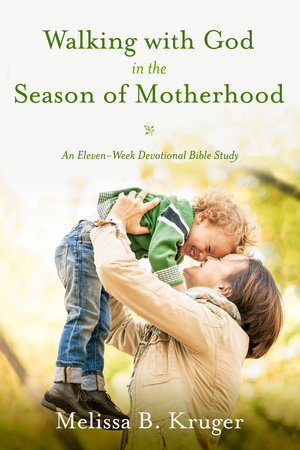 Motherhood is demanding, even exhausting at times. Many moms struggle with having the energy and fortitude necessary to keep up with the demands of their lives and the lives of their children. What adds to the difficulty, is motherhood doesn’t allow you to have much time to yourself. Getting adequate sleep can be a challenge, let alone carving out time to nourish yourself physically, emotionally, and most importantly, spiritually.
 Should it be any surprise, according to a Gallup poll, that when asked which profession is seen as dishonest and unethical, politicians top the list? It seems to be a common understanding amongst Americans that all politicians are corrupt and perhaps that’s just the way things have to get done on Capitol Hill. It wasn’t always this way.
 I consider that if a book read leads one to develop a sermon series over it’s content, then said book has had a significant impact. D. A. Carson (Research Professor of New Testament at Trinity Evangelical Divinity School), through this updated edition, provided both an illuminating and challenging book to stimulate us all in prayer. Praying with Paul, considers Paul’s major passages about his prayers for his readers and how what Paul prays for helps us with our prayers today.
 Meditation has some bad connotations in Christianity. It conjures up ideas of Eastern Mysticism and New Age Spirituality. It would probably surprise you to find that the Puritans offered a practice of biblical meditation that was vitally important for the Christian! Here Dave Saxton summarizes for us this Puritan practice, the vital need for us to recover this today, and the practice of it.


 Working out Salvation with Fear and Trembling