“From the Sordidness of Sin to the Purity of God’s Image”

May 9, 2011

Below is a recent article I wrote for The Gospel Witness (April 2011, pp. 6-8).

“From the Sordidness of Sin to the Purity of God’s Image”: The Doctrine of Sanctification

There was once a time when catechisms were a common feature in the life of the church. Through a series of questions and answers people would learn the basics of theology. It so happens that at the church where I serve as Pastor we are studying through the Baptist Catechism[i] in a weekly bulletin insert to seek to grow in our knowledge of God as best understood by our Baptist forebears. It seems fitting that at this time in preparation for celebrating Easter we would be at Question 38 of the catechism which asks “What is sanctification?” Since Easter celebrates the death and resurrection of our Lord Jesus Christ and that through this we are united to Him, and through our union with Christ we receive the blessing of sanctification (cf. 1 Cor 1:30) it is only fitting to consider what exactly sanctification is, how sanctification flows out of the cross of Christ and to consider bearing it has on the Christian life.

Towards a Definition of Sanctification

Puritan great William Ames (1576–1633) writes that sanctification is “the real change in man from the sordidness of sin to the purity of God’s image.”[ii] What we are understanding sanctification then to be is that process where we grow more and more in holiness. We are constantly being changed and conformed to the image of Christ through a joint process of our own along with the work of the Holy Spirit in us. In particular we will consider what the answer to the Baptist Catechism question noted above tells us about sanctification. The answer to the question reads, “Sanctification is the work of God’s free grace, whereby we are renewed in the whole man after the image of God, and are enabled more and more to die unto sin, and live unto righteousness.” There are a number of things we see about sanctification.

First, sanctification is a work of God’s free grace. Paul in 2 Thessalonians 2:13 notes that the work of sanctification is a work of the Spirit that flows out of God’s sovereign choice, and thereby, a work of His free grace. The verse reads, “But we ought always to give thanks to God for you, brothers beloved by the Lord, because God chose you as the firstfruits to be saved, through sanctification by the Spirit and belief in the truth.”[iii] We often act like when we are saved, our justification is done through the power of God, but our pursuit of holiness is by our own effort. In contrast, it is seen that even the ability to grow in godliness is a gift of God.

Second, we see that sanctification involves a renewing in the whole man after the image of God. In the fall, our image has been marred. It has been damaged by our sinfulness to the point that it effects all of man. We are totally depraved because of our sin. Yet, our goal is to regain that complete image of God through our pursuit of holiness. Therefore, sanctification is that process where we are being renewed into His image. Paul in addressing the Ephesian believers notes that we are to be “renewed in the spirit of your minds, and to put on the new self, created after the likeness of God in true righteousness and holiness” (Ephesians 4:23–24). Just as one would remove a dirty shirt, we are to remove our old, sinful self, and replace it with a new self, after the likeness (or image) of God.

Finally, we see that sanctification has a result that we are more enabled to die to sin and live to righteousness. As we grow more and more in holiness and are closely matching the image of God in our lives, we are more able to resist sin and temptation and instead to pursue righteousness. In fact, Paul in Romans 6:6 identifies a close relationship between our association with the death of Christ and our ability to bring our sin under control through sanctification. He writes, “We know that our old self was crucified with him in order that the body of sin might be brought to nothing, so that we would no longer be enslaved to sin.” As our old self has been taken off (or here crucified) we are no longer enslaved to sin and therefore are more able to resist it (put it to death as the catechism says) and to instead pursue righteousness. It is a life-long pursuit and we will never reach perfection this side of glory, but because of what Christ has done on the cross, we can pursue holiness and become conformed to the image of God in Jesus Christ!

The Cross and Sanctification

On Easter it is important therefore to consider the cross of Christ. The cross and the resurrection of Jesus Christ is the foundation of our faith. Without either, Christianity falls apart. That is why we must have a correct understanding of the death and resurrection of Christ because our Gospel message stands or falls upon it. Yet, the cross did not simply pay for our sin and our guilt as Christ became our substitute, but it made provision for our ability to grow in Christ-likeness through our pursuit of progressive sanctification.

Romans 6 is one of the clearest passages of Scripture which connects the dots between the cross of Jesus and sanctification. Our ability to pursue holiness clearly comes as a result of the cross. Paul begins by addressing an objection that if when we sin grace increases should we continue to live in sin (v. 1)? Paul says, “By no means!” Since we have died to sin we can no longer live in it (v. 2). But what does Paul mean when he says that we have died to sin? He is speaking specifically that those for whom Christ died have too died. Just as Christ was crucified for us, we too were crucified with Him. We are united to Him in both the cross and the resurrection. In fact, Paul goes on to connect the ordinance of baptism to that of identifying ourselves with the death of Christ. All of those who have been baptized into Christ have also been baptized into His death (v. 3). Baptism is, at the heart, a public identification. If we have chosen to identify ourselves with Christ we have identified with His death. Hence, Paul can write that, as we go down under the water of baptism, it is as if we have been buried with Christ and just as we come up out of the water of baptism, it is as if we have risen to new life with Christ (v. 4). This newness of life is the key to our understanding of sanctification and the cross. Through the death of Christ and our identification with it, we have died to sin’s control and mastery over us and have been given new life and the ability to pursue godliness.

He continues to say that if we have died with Christ we too will be raised with Christ (v. 5) and that our old self (our sinful nature) has been crucified with Christ  so that sin would no longer have control or dominion over us (v. 6) so that he can make the bold statement that “For one who has died has been set free from sin” (v. 7). If then we have died with Christ we then therefore live with Him and since death has no hold on Him so will it have no hold over us (vv. 8–9). In this death Christ died to sin (as death is the result of sin) and He now lives for God (v. 10) and therefore we too are dead to sin and alive to God (v. 11). As a result then of our identification with Christ in His death and resurrection we are to no longer live in sin but to be slaves to righteousness (v. 18). We are therefore to “Let not sin therefore reign in your mortal body, to make you obey its passions. Do not present your members to sin as instruments for unrighteousness, but present yourselves to God as those who have been brought from death to life, and your members to God as instruments for righteousness” (vv. 12–13).

We have been given the power to live for righteousness because we are no longer controlled to sin. We have died to it because Christ has died to it. And now since He lives, we too live and are able to live for righteousness. We are able to be holy because the Holy One died for us, and through our union with Him, we too have died to ourselves and to sin. As David Peterson writes, “God has consecrated to himself a new people, through the death and resurrection of his Son. By faith, we have been buried together with him by baptism into death, united with him in a death like his. God has dealt with our sins and bound us to himself, making it possible for us to live a new life to his glory and ultimately to be united with Christ in a resurrection like his.”[iv]

Sanctification and the Christian Life

In addressing the doctrine of sanctification, Baptist Divine John Gill (1697–1771) writes of sanctification being, “grace in the soul is a well of living water, springing up unto everlasting life”.[v] The pursuit of holiness is not one of drudgery as if it is obedience to the Law. Instead, it is everything of grace to the soul. The Holy Spirit, dwelling inside the believer, convicts us of sin and brings us ever closer to the image of Jesus Christ. God calls us to be holy because He is holy (1 Peter 1:16). Our goal is therefore to be like God, as perfectly manifested in the flesh in the person of Jesus Christ. This is not solely through our own effort as if we have to pull ourselves up by our bootstraps but is a joint effort through the power of God working in us that we put off sin and put on righteousness. This power in us comes as a result of being united to Christ through His death and resurrection.

This then is our ultimate goal in life. Because we are united to Jesus Christ in His death through the cross, we are called to glorify God by becoming more like His most perfect Son. This occurs through the process of sanctification. It is a glorious process, occupying our entire lives from the point when we are united to Christ at salvation to the point when we are perfected in glory. So, if something is so consuming of our lives and integral to our pursuit of the glory of God, we should reflect more on the matter and consider more how we can be faithful to this pursuit of holiness. For, it came at a great cost, the death of Jesus Christ. Through His death we have the power to become holy. As Anthony Hoekema writes, “God’s purpose for us, in other words, is not just future happiness or a guaranteed entrance into heaven but perfect likeness to Christ and therefore to himself. God could not, in fact, have designed a higher destiny for his people than that they should be completely like his only Son, in whom he delights.”[vi]

This Easter, do not think that Christ’s death only made you right before God in position, but that through the cross work of Christ, you are pursuing God’s highest purpose for you: being made right before God in the actual way you live!


 [i] For a brief introduction to the Baptist Catechism see the forward by James M. Renihan in The Baptist Confession of Faith and the Baptist Catechism (Vestavia Hills, AL/Carlisle, PA: Solid Ground Christian Books/Reformed Baptist Publications, 2010), pp. 89–91. For a more detailed examination see Tom J. Nettles, Teaching Truth, Training Hearts: The Study of Catechisms in Baptist Life (Amityville, NY: Calvary Press Publishing, 1998), pp. 47–58.

[ii] William Ames, The Marrow of Theology (Grand Rapids, MI: Baker, 1997), p. 168.

[iii] All Scripture quotations are taken from the English Standard Version.

[iv] David Peterson, Possessed by God: A New Testament Theology of Sanctification and Holiness. New Studies in Biblical Theology (Downers Grove, IL: Inter-Varsity Press, 1995), p. 100.

[v] John Gill, A Complete Body of Doctrinal and Practical Divinity, 3 vols. (London: Printed for W. Winterbotham, 1796), II, 312.

[vi] Anthony A. Hoekema, Saved by Grace (Grand Rapids, MI: Eerdmans, 1989), p. 233.


The Resurrection: An 18th Century Defense for 21st Century Christians

May 4, 2011

The two key elements at the heart of Christianity are the cross and the empty tomb. Rarely do many outside of the faith deny the veracity of the cross. That Jesus of Nazareth died in Jerusalem under the oversight of Pontius Pilate is a well-attested fact. The element more difficult to believe is the resurrection of Jesus Christ. Just as Paul found the men at Athens skeptical of the resurrection (Acts 17:32), so people today struggle to accept this most important truth. But without the resurrection of Jesus Christ, Christianity itself falls apart. Paul makes this explicit in 1 Corinthians 15:12–19:

“Now if Christ is proclaimed as raised from the dead, how can some of you say that there is no resurrection of the dead? But if there is no resurrection of the dead, then not even Christ has been raised. And if Christ has not been raised, then our preaching is in vain and your faith is in vain. We are even found to be misrepresenting God, because we testified about God that he raised Christ, whom he did not raise if it is true that the dead are not raised. For if the dead are not raised, not even Christ has been raised. And if Christ has not been raised, your faith is futile and you are still in your sins. Then those also who have fallen asleep in Christ have perished. If in Christ we have hope in this life only, we are of all people most to be pitied.”

Christianity stands or falls on the doctrine of the resurrection of Jesus Christ. In an age of skepticism regarding the supernatural, Christians find it difficult to show people the truth of Christianity because of denials of the resurrection. This is not a new phenomenon.

During the rise of the Enlightenment period in the 18th century, it became common to embrace only what could be verified using normal human faculties. Since no one could reproduce a resurrection, logically, it was reasoned, it must be impossible. When one removes the supernatural from Christianity, particularly through the denial of the resurrection of Jesus Christ, all of Christianity falls.

Thankfully, there were people who fought against the tide of anti-supernaturalism during the Enlightenment period. One such man was John Gill.

Introducing John Gill

John Gill was born in Kettering, Northamptonshire, England on November 23, 1697. His parents were God-fearing individuals of the Calvinistic Baptist tradition. His early years were spent studying in the local grammar school where he excelled in languages. The church at Kettering recognized his gifts as a preacher and in 1719 Gill became pastor of the famous Horselydown congregation in London where he served for a staggering fifty-two years until his death in 1771. Gill would become a prolific author and one of the most influential theologians of the Particular Baptist cause.

Gill’s Defense of the Resurrection

Gill taught and preached frequently the doctrine of the resurrection. One such occasion was the famous Lime Street Lectures of 1731.[1] While we cannot spend a detailed amount of time analyzing his defense, we can make some general conclusions about how he defended the resurrection and how we can learn to do the same today.

First, Gill knew his opponents and their arguments. Uneducated beyond some initial grammar school, Gill made it his goal as both a Christian and as a minister of God’s Word to be informed in the writings of the orthodox and the unorthodox alike. He was expertly versed in Jewish thought and literature, and was aware of ancient pagan authors and the arguments they made. He was aware of Christian thinking on the issue from the early church through the Reformation and post-Reformation Puritan period in which he lived. He was aware of the arguments made by those who agreed with a resurrection and those who denied it.

Second, he progressed through his argumentation in a logical way. First, he considers that the doctrine of resurrection is a “credible” thing. When one considers all of the amazing things that occur in the world and all of the things God has done in the Scriptures, resurrection from the dead is something that is not completely incredible to believe. From there he moves to more explicit references in Scripture to argue for the resurrection of the dead. Finally, he considers how the resurrection is necessary because it is connected with all kinds of other doctrines in the Bible. He clinches it with the key: If Christ is raised, so too are we. This leads the reader along the argument, slowly building the case, so that when one reaches the end, he faces an insurmountable argument defending the resurrection from the dead.

Third, the core of the defense of the resurrection for Gill comes straight from the Scriptures. When much Enlightenment thinking was turning to the other “book of the revelation of God” namely nature, to define the world, Gill still sees the lasting answers in God’s special revelation, Scripture. Our theology can only be derived from the Scriptures itself. It is God’s communication to man and thus gives us the answers we are looking for. Instead of rooting his argument in the conclusions of others, he looks to the Scriptures to defend this crucial doctrine.

Learning from Gill’s Defense

It is not just the secular atheistic world that denies the core supernatural elements of our faith but also much of liberal Christianity denies the miraculous and especially the resurrection from the dead. It is imperative that we understand and defend this crucial element of our faith. If the resurrection of Christ is denied then our faith is in vain. What then can we learn from Gill when defending the truth of the elements of our Christian faith?

First, the maxim of “know thy enemy” is invaluable. If we want to honestly interact with those who disagree with our position, we need to know what they are saying. Too many Christians attempt to contend against the arguments of liberals and atheists alike without knowing what they actually believe about the subject. Study the issue, especially as articulated by those who disagree with you. A. N. Wilson’s, Jesus: A Life, Barbara Thiering’s Jesus the Man, and John Shelby Spong’s, Resurrection: Myth or Reality? are good places to start. For defenses of the resurrection which interact with detractors see Gary Habermas and Michael Licona’s The Case for the Resurrection of Jesus and N.T. Wright’s magisterial The Resurrection of the Son of God.

Second, know the Word of God. There is no more important tool in your arsenal than the Word of God. Gill demonstrates his vast knowledge of the Word of God on the subject and draws Scriptures from throughout the Bible to support his argument. Strong argument for affirming the truth of the resurrection is based on a systematic understanding of the teaching in the entire Bible. For instance, Gill considers Job 19:25–27, Isaiah 26:19, and Daniel 12:2 from the Old Testament. The clinching argument from the New Testament is that since the resurrection of Christ is true (1 Cor. 15), then our resurrection is true too!

Finally, know how to make your argument. The reality is that the unbelieving mind cannot grasp the spiritual things of God. You cannot convince them with logical arguments that the resurrection is reasonable or possible apart from the Word of God. The mind of the unbeliever is hostile to God (Rom. 8:7). Our goal is to present the truth claims of the Scriptures and pray that the Spirit of God would use this Word to draw our hearer to Christ. Gill’s approach —a systematic walk through the Scriptures—is the best and most reasonable defense of the resurrection.

Our world may seem more sophisticated today than it was in Gill’s time. Yet little has actually changed. The arguments are the same. Nothing new is under the sun. Unfortunately what has changed is how little we care about history. Many of these fights have been raging for hundreds of years. Think about how much we can learn from those who have gone before us. Gill’s comprehensive defense of the resurrection should help us in our own defense of this crucial doctrine. And there is no more important doctrine.

In closing, Gill’s words as to the importance of the resurrection are fitting:

The whole gospel is connected with it; if there is no truth in this, there is none in that. As the doctrine of the resurrection receives confirmation from the doctrines of personal election, the gift of the persons of the elect to Christ, the covenant of grace, redemption by Christ, union with him, and the sanctification of the Spirit, so these can have no subsistence without supposing that.


[1] The sermons are available at http://www.pbministries.org/books/gill/Sermons&Tracts/sermon_87.htm


Faithful Families: Building Healthy Families God’s Way

April 4, 2011

I have the privilege of being part of an upcoming conference called Faithful Families: Building Healthy Families God’s Way. The keynote speaker will be Dr. Joel Beeke, President and Professor of Systematic Theology and Homiletics at Puritan Reformed Seminary in Grand Rapids, MI and author of The Family at Church and Family Worship.

I have the privilege of presenting a workshop titled: “My Warmest Love”: Samuel and Sarah Pearce as Models of Christian Marriage. Particular Baptist Samuel Pearce and his wife Sarah modeled a true and devoted love to one another during their brief lives. By looking at their letters to each other and their writings on their relationship we can see how husbands and wives today can and should be as intimate allies. The conference is being held July 16 at Grace Bible Church in Dunmore, PA. I hope you will plan to attend and learn to have a more “Faithful Family!” For more information visit the Life Reformation website.


Taking Responsibility

February 22, 2011

I am all for justice.

Recently, Luzerne County, PA judge Mark A. Ciavarella, was found guilty for a number of crimes involving the so-called “kids for cash” scandal. He was convicted of a number of the crimes but not others and was allowed to be released until sentencing. This did not sit well with parents of children who had been sent by the judge for minor crimes to detention facilities. And rightly so. It seems like the judge is being treated leniently while the children he sent away received far harsher penalties than they deserved.

Many though are accusing the judge and the detention of their children to be the cause of all their problems. Case-in-point, Sandy Fonzo, who confronted the judge at the press conference following the trial. Her son was convicted of a minor offense by the judge and sent away. She says he changed following that event, becoming angry and depressed, until tragically he killed himself. Similar stories were echoed by other parents and by those who were sent away by the judge. Truly, these things are heart-breaking. Punishment should fit the crime and it sounds as if these children were judged harshly solely over the greed of the judge.

The problem though is that those affected by the kids for cash scandal refuse to take any responsibility for their own actions. While the situation is awful and this judge should do his time for his crime, people are responsible for their own actions. Our society is so filled with blame-shifting that no one can own up and take responsibility for their actions any longer.

As awful as being locked away for a minor offense is, it is not the cause of all of your problems. The responsibility for your problems lies squarely at your door. The reality is, the problems in my life are ultimately my responsibility. Do events influence the way I live my life? Yes. Being jailed for minor offenses will surely affect the way I think and act. Yet, I am still the one responsible. Me, and me alone is responsible for my behavior. Yet, in our society we blame everyone else but ourselves. It’s our parents fault, our teacher’s fault, our government’s fault, etc. You get the idea.

Romans 14:12 reminds us that we will all give an account before God for our actions. The Scriptures teach we are responsible for our thoughts, our speech, our actions, our intents. And unfortunately, left to ourselves we fail to take responsibility. Yet, we will be held accountable for our actions before God. We might get to blame a judge today for our lot in life, but one day, the Judge of heaven and earth will not allow us to shift the blame. It rests square upon our shoulders. Either we will pay for it for eternity, or the One who died on the cross can pay for it for us if we believe.

So, I’m all for justice. The judge should get the book thrown at him. We should all be heart-broken about how these children were affected. But, we all need to be reminded that we are responsible for our problems ultimately. Not someone else. Learn to take responsibility here for your actions. Realize you are to blame and do something about it. Thankfully, we have a fair and impartial Judge in heaven who will acquit you of your crime if you trust in His Son for salvation.


Answering Theological Questions for Children

February 14, 2011

A new book review from my wife Tracy.

God Gave Us So Much (Waterbrook Press, 2010).

This delightful treasury includes three books in one collection. Here, Mama, Papa, Little Cub, and the Twins explore God’s world, love, and heaven. Complex subjects are handled in a format even the youngest child can understand.

In God Gave Us the World, Little Cub and her family visit a museum that features an exhibit on bears around the world. Little Cub learns that while her family lives in the North Pole where it is cold and snowy, other bears live in other climates all over the world. While exploring black bears, panda bears, sloth bears, and grizzly bears, Little Cub and Mama discuss how each species is different. Little Cub learns that other bears eat things and live in places that are completely different from her way of life. Even so, they are all bears and all were made by God. Every bear has a special home and the variety of bears reflects God’s creativity. From the concept of a big, creative, sovereign God, the author helps children understand that the world reflects God’s glory and we are put here to worship and serve him in the special home he gave us. In addition, we are to take care of God’s special world. Little Cub falls asleep at the end of the day happy to be a bear and glad that God has given her a special place in his world.

This story will help children understand their place in the world and why God made the world. It also helps them gain an appreciation for the diversity of God’s creation and their responsibility to take care of it, while avoiding being politically correct. After all, proper stewardship of the earth comes from a proper understanding of the God who made this special planet.

In God Gave us Love, Little Cub is frustrated because the otters are ruining her fishing day by scaring away the fish. Grampa helps her understand that God wants us to show his love to everyone. Little Cub understands that God made us to love others, but she realizes there are different kinds of love such as the love between her parents and love between friends and family and love for God. Little Cub also realizes that while she loves her twin brother and sister, sometimes she thinks they are as pesky as the otters. Grandpa explains that we don’t always feel like loving others, but choosing to love them is the right thing to do. The story then turns to God’s love for us as Little Cub wrestles with questions such as can I do anything that will make God not love me, and how do I know God loves me?

This reassuring book will help young children understand that they are responsible to show love to others even when they don’t feel like it. They will also learn that they can never do anything that will separate them from God’s love. In the end, no one loves us as much as God loves us.

In God Gave Us Heaven, Little Cub learns that heaven is God’s home. She learns that older people die and go to heaven, but sometimes younger people die too. Even though bad things happen here on earth, nothing bad ever happens in heaven. Even though Little Cub is having a good time on her fishing trip with Papa, she learns that heaven will be even better than her best times on earth. She will not need her stuff in heaven, besides, Papa reminds her that our best stuff on earth are family, friends, and faith. Little Cub wonders if she will see her family in heaven. Papa tells her that all our loved ones will be there. When Little Cub asks how to get to heaven, Papa explains that God’s Son, Jesus, came to be our bridge and provide us way to heaven.

This book helps answer many of a child’s most commonly asked questions about heaven. It would be especially comforting for a child who has lost a loved one, or who is asking questions about dying and what comes after death. If there is a weakness in the book’s explanation, it may be that the author does not state clearly that only God’s children go to heaven. This may be a point parents would want to clarify with their child depending on their child’s level of understanding.

All three of these books offer clear, comforting answers to a child’s questions. The subjects are treated seriously, yet in an age-appropriate way. The beautiful illustrations are a pleasure to look at, and the ending page of each book sums up the message of the story beautifully making a child feel safe and secure in her world.

This book was provided free of charge to me by Waterbrook Multnomah for the purpose of review.


Abortion is Murder

January 12, 2011

It’s time someone finally said it. Abortion is murder. And it’s time that the mainstream media actually print someone saying that. Frankly, the political correctness of our world in tip-toeing around so-called “women’s reproductive rights”, is nauseating. Something must be said, and something must be done. In Pennsylvania alone in 2008 approximately 41,000 children lost their lives because we value death over life. Our culture is a culture of death. Death is celebrated and cheered, while life, and the pursuit of it is looked down upon. Who would ever think that a mother would have some so-called right to kill the life of their child? What kind of “civilized” world do we live in?

I know people will be up in arms at me for saying these things. “Think about all those women whose lives are endangered?” Yes, there are some, but it is very rare, and if the life of the mother and child are in jeopardy, abortion is something that should be considered. “Think about babies born as a product of incest or rape?” Yes, there are some, but it is not terribly common. And frankly, why punish the baby? That baby did nothing to deserve to die. Carry that child to term and put it up for adoption. Choose life, not death. “What about those who did not plan on having a baby or cannot afford one?” Perhaps you should have thought of that before you brought new life into the world? So, now you’re going to punish this new baby by killing it because you did not know better? What a pragmatic, pluralistic, death-loving culture we live in if these are the kinds of arguments people have to justify abortion.
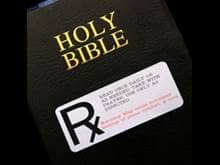
This nation once stood for the pursuit of life, liberty, and happiness as unalienable rights for all people. It is clear though that in our nation, the pursuit of liberty and happiness comes at the expense of life. And please, do not give us the tired arguments that the baby is not a baby. Babies, from the moment of conception, are a living being. They are human. And to eliminate that life, is murder. Plain and simple. No sugar coating this one. Abortion is murder. There I said it.

And frankly, why are more not saying it? Why is the church of Christ not standing up and demanding our nation restore rights to our unborn children? Why are we not filled with moral outrage over the needless and senseless death we see all around us? If God knew David in the womb, did He not know you and your children? Where in all the Bible, can you find justification for abortion? Christians, if you truly are Christians, stand for life. Demand that people embrace life and not death.

But Christians, you will need to step up. Help mothers who want to abort their babies. Show them the alternatives. And when mother’s put their babies up for adoption, adopt them! Show you care enough about life that you are willing to help protect and care for another life rescued from death.

You may think I am crazy. A religious zealot. You might even think I am dangerous. But frankly, I’m just being honest. God cares about the unborn, and so should all of us. Our nation is continuing to slip more and more into immorality. The mark of a civilized nation is how they care for the marginalized and the voiceless. There are none as voiceless as unborn children. Love them, protect them, care for them, let them live!

Frankly, our world needs to hear it ringing loud and clear. We stand for life and not death! Abortion is murder!


New Blog Series – Healing

January 2, 2011

Greetings everyone,

After a great Facebook discussion with people from various Christian traditions I realize there is a lot of misunderstanding as to what the Bible teaches about physical healing. So, Lord willing, over the next number of months I hope to develop a biblical theology of healing to better help us all understand what the Scriptures teach on this. Pray for me as I seek to work on this over the next while. If you have questions about the topic, post them in the comments and I will hope to deal with them in various posts.

I hope it will be edifying!


October, November, December winners

January 2, 2011

Okay, I’m terribly far behind on my blog giveaway for a Crossway book a year. So, without further adieu, the winners of the October, November, and December books!

October’s book was Entrusted with the Gospel edited by D. A. Carson. The winner is: Brian Kooshian!

November’s book was History and Fallacies by Carl Trueman. The winner is: Bob Hayton!

December’s book was For the Fame of His Name edited by Sam Storms and Justin Taylor. The winner is: Rollayln Ruis

Everyone, e-mail me your mailing addresses at allen [dot] mickle [dot] jr [at] gmail [dot] com.

Thanks to everyone participating in the contest!


Repealing DADT Will Hurt Chaplains

December 1, 2010

It appears Lady Gaga may get her wish.

The Pentagon released their study of the controversial Don’t Ask Don’t Tell policy recently where gays currently can serve in the armed forces as long as their homosexual orientation and behavior is not lived out openly. Many on the leftward spectrum feel it a violation of basic freedoms to force someone to serve but not serve openly. Defense Secretary Robert Gates said that the current ban, “requires people to lie.” While those on the right of the spectrum worry the ramifications of a lift of the ban may be dangerous for the military in the midst of two wars. The report addressed a recent poll of the military which found that two thirds of soldiers serving do not care if gays serve openly in the military and therefore the ban should be scrapped (interestingly those who did not want the ban repealed are those serving in active combat).

What most of the media does not focus on is what those with religious responsibilities in the armed forces think about the possible repealing of DADT. While most Christian chaplains serving are ready and willing to provide counsel and help to those of any kind, whether hetero or homosexual, the possible repeal of the ban may handcuff chaplains from maintaining their religious freedom as they perform their duties for the military.

Richard Young, a retired Army Colonel who spent 25 years as a chaplain said in the July 17, 2010 issue of World magazine, “For the first time in American history, virtues that are taught by chaplains will go directly against the moral message of the military. This will really muzzle how chaplains will be able to minister without facing charges of discrimination.” Evangelical Christians currently make up the core of the chaplaincy serving the armed forces. They generally take the Bible’s condemnation of homosexuality very seriously. When they are forced to no longer be able to articulate what they believe because it is against government policy, we may see a great departure of those who serve the spiritual needs of the military.

Chaplains have many concerns how this repeal may force them to choose between serving the military and serving God. A letter sent by a number of retired chaplains to urge President Obama and Defense Secretary Gates to keep DADT listed a number of concerns. Among them, the retired chaplains inquired whether, as the administrators of the Army’s Strong Bonds program for marriages strained by military life, chaplains would have to begin including same-sex couples? Would they be forced to allow homosexual soldiers to assist with lay duties at religious services? And would chaplains be required in counseling session to remain silent on their views about homosexuality?

Repealing the DADT ban will have wide-reaching effects on the military. While gays will be able to serve openly, chaplains will not. The specific goal of chaplains is to provide the much needed spiritual support to our men and women in uniform. If they will not be able to do their duties because the government restricts their religious freedom by not being able to talk about their belief that homosexuality is wrong, and they are forced the leave the military, who will take their place? It is clear, that while it may help gays by repealing DADT, it has very real and great potential to hurt chaplains.


An Open Letter to Newly Elected Officials

November 18, 2010

Now that November 2 has come and gone and the ads and the campaigning becoming a distant memory the boring drudgery of actual governing is upon you. Promises made about fiscal policy, health care overhauls and job creation now have to be translated into reality (as much as possible in the current governmental arrangement). While governing effectively and upholding the will of the people and the Constitution is your major focus, there is more to being an elected official than policy.

Ethics, integrity, character, and morality are all necessary aspects of serving as a public political figure. Not only do citizens elect you to uphold the Constitution and defend the will of the people, but also to stand as a moral compass for a nation that continually is, to utilize a phrase from Robert Bork, “slouching towards Gomorrah.” For a public representative there must not even be a hint of corruption, ethical violations, or immorality. I challenge you to uphold a sense of profound integrity as you serve in this office. In fact, I would challenge you at an even more fundamental level. All people are inherently sinful (Romans 3:23) and are doomed to failure if left to their own devices (Proverbs 14:12). Left to yourself you will inevitably follow in the selfish footsteps of many of your predecessors who sought their own benefit rather than the benefit of the people. Apart from submitting yourself to the ultimate Lordship of Jesus Christ there is no hope for you (Titus 3:3–7). If you have not ever recognized your sin and repented of it and turned to Jesus Christ as your Lord, I would encourage you to do so today. As Acts 3:19 reads, “Repent therefore, and turn again, that your sins may be blotted out.” But regardless, I challenge you, not just to pursue fiscal accountability but moral integrity and ethical character. Prove to the people through your service that you will stand as a beacon of integrity in Washington.

Please know that I pray for you regularly as 1 Timothy 2:1–2 reminds us. I pray first and foremost that you would submit your life to Christ today and that you would follow Him closely and pursue a holy life as He is holy. I also pray that you would have the strength to serve the people and uphold the Constitution and that you would create and enforce laws that are pleasing to God and are good for all men. As a Christian and a pastor, I humbly submit myself to my governing officials (Romans 13:1) but also expect them to honor Christ and fulfill the will of the people.

I again reiterate, I will covenant to pray for you regularly as you seek to fulfill your new elected role serving the American people. Remember to do so with integrity, ethics, character, and morality, all rooted in Jesus Christ.