The Qualities of a Theologian

May 12, 2009

A Disciplined Mind

First, the theologian need not be a genius, but he must bring to the study the following personal qualities: (1) He must have a love of learning and an insatiable thirst for the doctrines of Scripture; (2) he must be able to organize the material he studies and correlate it with what he already knows; and (3) he must be disciplined to go no further than what is written and be content simply to think God’s thoughts after Him. This final quality requires not only mental discipline but intellectual humility as well.

A Knowledge of the Original Languages of the Bible

Second, the theologian must be proficient in the biblical languages, including an attendant proficiency in exegetical methods. Exegesis is, after all, foundational to systematic theology, and the original biblical languages are foundational to correct exegesis. John Murray, whose work masterfully combines skill in both, says the following:

“The main source of revelation is the Bible. Hence exposition of the Scripture is basic to systematic theology. Its task is not simply  the exposition of particular passages. That is the task of exegesis. Systematics must coordinate the teaching of particular passages and systematize this teaching under the appropriate topics…. It is apparent how dependent [systematic theology] is upon the science of exegesis. It cannot coordinate and relate the teaching of particular passages without knowing what the teaching is. So exegesis is basic to its objective.”

In sum, systematic theology builds its structure with the material that correct exegesis provides, and this structure then aids in later exegesis and vice-versa.

A Holy Affection Toward God

Third, the theologian must have a holy affection toward God. David captures this in Psalm 25:14: “The secret of the Lord is for those who fear Him, and He will make them know His covenant.” “Secret” translates sodh, a word immediately describing intimacy and confidentiality; in fact, the NIV puts it this way: “The Lord confides in those who fear him.” This word is found in contexts more explicitly describing revelation, such as Jeremiah 23:18, 22 and especially Amos 3:7. Therefore, David seems to be asserting here that fearing the Lord s (or holy affections are) directly related to an increased ability for understanding God’s revealed truth.

Further, Paul suggests in Romans 12:2 that in order to know and approve the will of God, the believer must both yield himself sacrificially to God and avoid conformity to this resent godless order (“world”: aion). As Murray notes, the will of God here is the “will of commandment,” essentially the will of God “as it pertains to our responsible activity in progressive sanctification.” That said, sanctification obviously requires that Scripture be properly applied and obeyed (which activities themselves require correct understanding and correlation). Therefore, Paul implies here that a yielded life–a holy affection for God–is a requisite for understanding God’s written will and, thus, for doing theology.

Conversely, without this holy love for God and His word, Scripture hides its significance and systematic theology is, consequently, impossible. Strong helpfully concludes, “Only the renewed heart can properly feel its need of divine revelation, or understand that revelation when given.”

Divine Enlightenment

Finally, the theologian must have divine illumination. He needs this not only to mitigate his inherent depravity but also to enable him to appreciate and correlate the significance of the text throughout his life. Here it is also important to note that this ministry of the Spirit is bound up with various ordinary means, summarily the diligent study mentioned above. This is to say that the Spirit’s illumination works organically through the interpreter’s mind as the interpreter actively engages in the learning process.

Rolland McCune, A Systematic Theology of Biblical Christianity, vol. 1 (Allen Park, MI: Detroit Baptist Theological Seminary, 2009), pp. 31-34.


An Ordinary Pastor

May 11, 2009

I like so many others am tempted by the glamour and glitz of pastors who write books, have large ministries, speak at many conferences, and the like. Frankly, my own selfish pride gets the better of me at times and says to me, “Allen, you can be the next John Piper.” I wonder sometimes at the purpose of my pursuing a PhD. Is it to help my ministry, or another academic credential. Isn’t being an “ordinary pastor” sufficient? Does the world even need another John Piper? Or does the world need more ordinary pastors?

I picked up my copy of D. A. Carson’s book about his father, Memoirs of an Ordinary Pastor: The Life and Reflections of Tom Carson, a few weeks ago and picked it up to start reading it last week. At a brief 160 pages, and in a well-written narrative format, the book is a quick read. It is not your normal D. A. Carson faire. Instead of rich biblical studies or philosophical thoughts on postmodernism or some other topic, it is a simple biography of a simple man. It is a biography of his father, pioneering missionary in Quebec, Tom Carson.

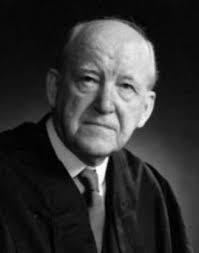
I knew of Tom Carson and some of the other men who made their way into Quebec to face the predominently Roman Catholic French population. As one who grew up in a Fellowship church (a descendent of the Union that Tom started in) I was aware of “Fellowship French Missions” and the men that started it. I also learned more as I studied Canadian Baptist history in school and on my own and even more as I served at Toronto Baptist Seminary where Tom had attended school.

What is so important about Tom Carson? Nothing ultimately…

What I mean is, nothing ultimately about Tom is important. Tom was a man who simply strove to follow Christ by serving Him in the ministry. Tom was not a great man. Tom was an “ordinary pastor.” That is what makes this book so important for so many people today. It personally reminded me of the point in which I began pursuing the pastoral ministry. It was not about me, it was about serving Christ.

The reality is, 99% of us will never be John Piper, Mark Driscoll, Matt Chandler, or Mark Dever. 99% of us pastors will be Tom Carson’s. Men faithfully plodding along in the vineyard where God has placed us. We will work in small churches, often see few converts, and will be discouraged and frustrated and wish we were more effective. We won’t write books and we won’t be on the radio. We won’t be invited to speak at conferences or the like. But, then again, that’s not really the point is it? The point of the Christian ministry is not fame but faithfulness in following our Lord and Saviour Jesus Christ.

Tom’s story moved me as it was faithfully told by his son. Through first hand account, journal entries, letters and such, Don Carson takes us into the life of an ordinary pastor. After reading it, I felt the need to repent of my sinful selfish desires for fame and fortune and rededicate myself to simply being an “ordinary pastor.” The point of the pastorate is not having the biggest church, the most converts, the best Sunday School, planting the most churches, writing the most books, having the most sermons downloaded, or being asked to the most conferences. God has called some men to this truly, but He has not called most. He has called most of us to be faithful servants and to plod along as “ordinary pastors.”

There are so many rich gems in this book but I simply want to leave you with an extended quote which finishes the book. Here Carson clearly points out the point of the life of this ordinary pastor. I hope my life will be found as worthy as his.

Tom Carson never rose very far in denominational structure, but hundreds of people in the Outaousais and beyond testify how much he loved them. He never wrote a book, but he loved the Book. He was never wealthy or powerful, but he kept growing as a Christian: yesterday’s grace was never enough. He was not a farsighted visioary, but he looked forward to eternity. He was not a gifted administrator; but there is no text that says, “By this shall all men know that you are my disciples, if you are good administrators.” His journals have many, many entries bathed in tears of contrition, but his chilren and grandhildren remember his laughter. Only rarely did he break through his pattern of reserve and speak deeply and intimately with his children, but he modeled Christian virtues to them. He much preferred to avoid controversy than to stir things up, but his own commitments to historic confessionalism were unyielding, and in ethics he was a man of principle. His own ecclesiastical circles were rather small and narrow, but his reading was correspondingly large and expansive. He was not very good at putting people down, except on prayer lists.

When he died, there were no crowds outside the hospital, no editorial comments in the papers, no announcements on television, no mention in Parliament, no attention paid by the nation. In his hospital room there was no one by his bedside. There was only the quiet hiss of oxygen, vainly venting because h had stopped breathing and would never need it again.

But on the other side all the trumpets sounded. Dad won entrance to the only throne room that matters, not because he was a good man or a great man–he was, after all, a most ordinary pastor–but because he was a forgiven man. And he heard the voice of him whom he longed to hear saying, “Well done, good and faithful servant; enter into the joy of your Lord.”


Horatius Bonar “Living sacrifices”

May 11, 2009

Learn self-denying Christianity. Not the form or name, but the living thing. “Even Christ pleased not himself.” Let us in this respect be His true followers; bearing burdens for Him; doing work for Him; submitting ot the sorest toil for Him; not grudging effort, or cost, or sacrifice, or pain; spending and being spent for Him; abjuring the lazy, luxurious, self-pleasing, fashionable religion of the present day.

A self-indulgent religion has nothing in common with the cross of the Lord Jesus Christ; or with that cross of ours which He has commanded us to take up and carry after Him, renouncing ease and denying self. Our time, our gifts, our money, our strength, are all to be laid upon the altar. We are to be “living sacrifices” (Rom. 12:1).

Horatius Bonar (1808-1889)

Michael A. G. Haykin and Darrin R. Brooker, Christ is All: The Piety of Horatius Bonar (Grand Rapids, MI: Reformation Heritage Books, 2007), p. 197.

See other volumes in this series (Profiles in Reformed Spirituality) on Alexander Whyte, Jonathan Edwards, Hercules Collins, George Swinnock, and John Calvin.

The complete works of Hortaitus Bonar can be purchased here.


D. Martyn Lloyd-Jones Resource

May 7, 2009

See here for a great resource on Dr. Martyn Lloyd-Jones, the Martyn Lloyd Jones Reference Hub. This looks like an excellent resource where you can find many Lloyd-Jones resources!


Praising God for His Church!

May 7, 2009

My wife and I go to the world’s best church, Hespeler Baptist Church, in Cambridge, ON. Ever since coming to the church last year we have been welcomed, loved, prayed for, invited into homes, allowed to serve, and privileged to be a part of this body of Christ!

Ever since we lost our job in March we have been worried about what would happen to us. We are running out of money and have not received any unemployment, and despite my efforts at trying to find a job, nothing has happened yet. But we do not have a church that simply says, “go, be warm and well fed.” No, we have a church that loves us and wants to care for us and seeks to mee our needs in practical ways. Our elders are always asking us how we are doing so they can pray and care for us. I have never felt so cared by a church and its leadership in my life. Today, I want to thank God for our local church, our lifeline! Without our church, we would be drifting! But our churhc loves us and wants to care for us! Praise God for His church!


Pastor Candidate Questionnaires

May 6, 2009

Is anyone else tired of filling out questionnaires?

Just today I finished three different questionnaires. One was for a job at a college, one was for a church planting opportunity, one was for pastoring. They all ask the same questions but in different ways. It makes it impossible to simply cut and paste your information from one to the next. Isn’t it possible to somehow standardize pastoral candidate questionnaires?

I understand the purpose of pastoral candidate questionnaires. They are designed to better weed out people who really are not the right people for a pastoral position. That is a good thing! In an age when a million people can apply for a single rural church through the wonders of the internet, things like pastoral questionnaires are helpful. Here is where they are not helpful:

1) A pastoral questionnaire that you send out to every individual who applies that is 7 pages long and asks you every possible question, is not helpful.

2) A pastoral questionnaire that asks the same things that are on a resume, yet you still ask them, is not helpful.

3) A pastoral questionnaire that asks for your mother’s maiden name and your medical history is not helpful.

4) A pastoral questionnaire that you really will not look at (because you end up asking the same questions later) is not helpful.

A pastoral candidate questionnaire should be something that initially weeds out undesirables but does not force every candidate to provide transcripts of their schooling, a DNA test, and a credit check. It should ask basic questions like answers to basic theological question and controversial issues, how you would handle different situations, etc. It should not ask what will be on a resume or what can be heard on sermons. When a church decides to move forward with a candidate then they can ask more specific and probing questions throughout the process.

When I filled out a 10 page pastoral questionnaire last year and I never even received confirmation they received it, I realized there was big problem when it came to churches and questionnaires. A church of 50 people should not Google “pastoral candidate questionnaire” and pick one at random that better applies to a church of 300. Ask the questions that are pertinent to the specific church. You will make less work for yourself and not frustrate the candidates incessantly.

Any other thoughts about pastoral candidate questionnaires?


Michael Horton on Joel Osteen

May 4, 2009

J. Gresham Machen Professor of Systematic Theology and Apologetics at Westminster Seminary California, Michael S. Horton, has written a brief but excellent critique of the theology of Joel Osteen. Read and be edified by “Joel Osteen and the Glory Story: A Case Study.” Horton’s conclusion:

My concern is that Joel Osteen is simply the latest in a long line of self-help evangelists who appeal to the native American obsession with pulling ourselves up by our own bootstraps. Salvation is not a matter of divine rescue from the judgment that is coming on the world, but a matter of self-improvement in order to have your best life now.


Horatius Bonar “The shed blood of Christ: The foundation of Christianity”

May 4, 2009

What is Christianity? Not metaphysics, not mysticism, not a compilation of guesses at truth. It is the history of the seed of the woman–that seed the Word made flesh–the Word made flesh, the revelation of the invisible Jehovah, the representative of the eternal God, the medium of communication between the Creator and the creature, between earth and heaven.

And of this Christianity, what is the essential characteristic, the indispensable feature from first to last? Is it incarnation or blood-shedding? Is it the cradle or the cross? Is it the scene at Bethlehem or at Golgotha? Assuredly the latter! “Eli, Eli, lama sabachthani,” is no mere outcry of suffering nature, the cross is no mere scene of human martyrdom, and the great sepulchre is no mere Hebrew tomb. It is only through blood-shedding that conscience is purged; it is only at the cross that the sinner can meet with God; it is the cross that knits heaven and earth together; it is the cross that bears up the collapsing universe; it is the pierced hand that holds the golden sceptre; it is at Calvary that we find the open gate of Paradise regained, and the gospel is good news to the sinner, of liberty to enter in.

Let me, with the newly sharpened axes of rationalism, do their utmost to hew down that cross; it will stand in spite of them. Let them apply their ecclesiastical paint-brush, and daub it all over with the most approved of mediaeval pigments to cover its nakedness, its glory will shine through all. Let them scoff at the legal transference of the sinner’s guilt to a divine substitute, and of that Surety’s righteousness to the sinner, as a Lutheran delusion, or a Puritan fiction, that mutual transference, that wondrous exchange, will be found to be wrapped up with Christianity itself Let those who, like Cain of old, shrink from the touch of sacrificial blood, and mock the “religion of the shambles,” purge their consciences with the idea of God’s universal Fatherhood, and try to wash their robes and make them white in something else than the blood of the Lamb; to us, as to the saints of other days, there is but one purging of the conscience, one security for pardon, one way of access, one bond of reconciliation, one healing of our wounds,, the death of Him on whom the chastisement of our peace was laid, and one everlasting song, “unto him that loved us, and washed us from our sins in his own blood.”

Horatius Bonar (1808-1889)

Michael A. G. Haykin and Darrin R. Brooker, Christ is All: The Piety of Horatius Bonar (Grand Rapids, MI: Reformation Heritage Books, 2007), pp. 79-80.

See other volumes in this series (Profiles in Reformed Spirituality) on Alexander Whyte, Jonathan Edwards, Hercules Collins, George Swinnock, and John Calvin.

The complete works of Hortaitus Bonar can be purchased here.


Peter Toon Resources

May 1, 2009

Peter Toon (1939-2009) was a priest in the Chuch of England and an excellent theologian and historian. Many of his books (if not all) are available here. I would highly recommend all of his material but would particulalry direct you to his book, The Emergence of Hyper-Calvinism in English Non-Conformity, 1689-1765, originally published in 1967. It is an excellent work. Obviously he was not perfect and I do not agree with all of his theological/historical conclusions but this is an excellent resource for pastors and academics alike.

(HT: Justin Taylor)


What do you do Until the Honeymoon is Over? Preaching During Your First 6 Months

May 1, 2009

I’ve been thinking a lot lately about preaching.

With the hope of being in a full-time pastorate soon the thought had occurred to me, what should the content of a pastor’s preaching be during the first 6 months he is there? I mulled over this question for sometime. My thought was, you cannot possibly know exactly what a church will need to hear from the Word of God until you have spent some time with them.

In some ways, the first 6 months is like a honeymoon period. No pastor walking into a church should think they can change anything during the first 6 months. One must even be careful about considering changing anything after the first 6 months. We need to earn the church’s trust before we can consider changing everything they are doing. Granted, things may need to be changed to be more reflective of the Scriptural requirements for a local church, but we must be careful how that occurs.

But back to preaching.

What should a new pastor consider preaching at his new church? Too many pastors do not think this through. They just jump in preaching through Ephesians or something without taking some time to consider the needs of the congregation. Obviously no one can truly know their flock after only 6 months, but 6 months will give you a handle on some of the issues facing the church, certain needs that need to be addressed, so you can effectively come in and begin to teach through the whole counsel of God in a redemptive fashion. While all Scripture is profitable, not all Scripture is applicable at certain times in the life of the church. So, with these questions in mind, I sent an e-mail to those I knew in the ministry and asked their thoughts.

I got a few answers that I considered typical. Preach through Ephesians. Preach through 1 Corinthians. Another one I got was one I did not expect: Preach through a Gospel. This they argued would show that the emphasis on your ministry was Christ. Good thought. These were the typical kind of answers I received. Those who suggested preaching through a book did not seem to think one should preach a “topical” series at the beginning because expository preaching is the mandate of the pastor. Now, I agree that we should preach in an expository fashion, but to think we cannot preach expositionally through a topical series is misunderstanding the full nature of expository preaching.

Two kinds of answers though stuck out in my mind. One came from a wise pastor I know here in Ontario. He said, Pray! That seems so basic but often left out of the equation of what the content of a pastor’s preaching should be. Pray about what you should preach. The Lord will impress on your heart and mind a book or a topic that needs to be preached. God knows better than anyone what should be preached! This is an excellent foundation. While I think many expository preachers lack basic planning and thinking through why they preach what they preach, no matter what we choose or what we plan to preach on, the starting point should be seeking direction from the Lord in prayer.

The next answer I received from my own pastor and from my wife’s former pastor. They dovetailed nicely and I thought this was the ideal approach to take about what the initial content of preaching should be for the first 6 month tenure of a pastor. My pastor wrote me and said,

…don’t be reluctant to preach the Gospel often in the early months of your ministry in a new church.  Faithful believers will rejoice in the Gospel being preached and those who are not saved need to hear it!  Exalting Christ through the Gospel will establish the tone of your ministry from there forward.

These are wise words. My wife’s pastor wrote me and suggested the following:

Unless there is a specific need to address another topic or Biblical passage, I would strongly suggest a topical series (that may be handled expositionally) staking out Christian and church priorities. Highlight things like a high concept of God, the authority of Scripture, Christ-centered faith, our dependence upon grace for salvation and all things, the heavy Biblical concern for devotion and personal godliness (and what that looks like, etc), evangelism, what Biblical church and ministry look like – these kinds of things. Stake out the priorities, “this is what we are all about,” etc.

So, my suggestion is, during the first 6 months, the pastor approach the content of the Gospel as his message. This could be presented in a topical series about the foundation we have in the death and resurrection of Christ, biblical priorities, the nature of salvation the expectation of Church members, etc. The gospel should obviously saturate all our preaching, but during the first 6 months, as “Gospel” preachers, we should clearly make the Gospel the content of our preaching. As my wife’s former pastor said, “Stake out the priorities.” And as my pastor said, “Exalting Christ through the Gospel will establish the tone of your ministry from there forward.” These are both wise suggestions in my opinion.

So during the first 6 months, preach on the Gospel. That is really what the ministry is all about is it not? The Gospel of Jesus Christ? Then when you have had the opportunity to observe the congregation you can map out where you want to go from there in your preaching. That might mean going to the Gospel of Mark, the book of Ephesians, or the book of Genesis. It will depend on your congregation and the leading of the Spirit. But my call is to all you expositional preachers out there; do not pick your preaching randomly. Ask the following questions:

1) What are the needs of my congregation?

2) What is the Spirit communicating to me I should preach?

3) How will this book of the Bible fit in with the larger context of the progress of redemption?

4) How will this book of the Bible fit in with what I have previously preached and what I will preach after?

Unless you are John MacArthur and can preach through the entire New Testament in one church, you will need to think hard about what you will preach to your people. And please, pastors, stop neglecting the Old Testament! We do our people a disservice by neglecting 2/3 of our Bible! They need Leviticus just as much as they need Romans!

So, preach the Gospel, and think and pray carefully about the content of your preaching.