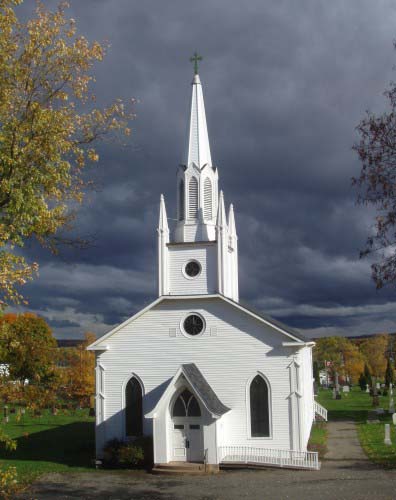
Rules for Hymn Singing

September 24, 2007


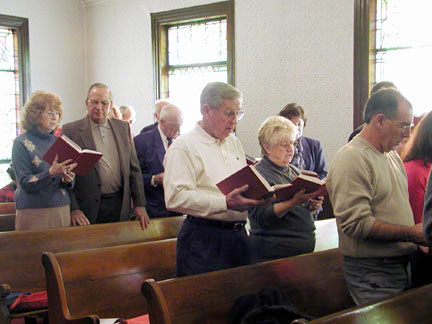
In the introduction to the hymnal Christian Hymns put out by the Evangelical Movement of Wales, they include John Wesley’s rules for hymn singing. I do not know the original source of these but I thought they were interesting. Enjoy!


1. Learn the tunes.

2. Sing them as printed.

3. Sing all. If it is a cross to you, take it up and you will find it as blessing.

4. Sing lustily and with good courage.

5. Sing modestly. Do not bowl.

6. Sing in time. Do not run before or stay behind.

7. Above all, sing spiritually. Have an eye to God in every word you sing. Aim at pleasing Him more than yourself or any other creature. In order to do this, attend strictly to the sense of what you sing, and see that your heart is not carried away with the sound, but offered to God continually.


Faith-Based Education

September 21, 2007


With regards to the whole faith-based education debate in Ontario with the provincial election coming up on October 10, the National Post printed my letter today. I thought I would include it here for all to read.


All education is faith-based


I find the discussion over faith-based publicly funded education rather amusing: Does anyone really believe that public education currently is not faith-based? Excluding the Roman Catholic School Board (and it makes no sense to support them when denying support to other faiths), the public school system embraces its own faith system.


That faith system is secular humanism. It is not as if the public system is totally “fact” based. The entire approach of the teaching philosophy there is that man is the ultimate, man is ultimately good, there is nothing beyond man. This in itself is faith — there is, after all, no scientific process to determine if this is right or wrong.


The debate should not be faith-based vs. public education. It should simply be about what faith systems we support: The ones that embrace a deity as the ultimate, or one that embraces man as the ultimate.


Christian Influence in the Public Square

September 17, 2007

An interesting upcoming day of lectures coming up at The Toronto Baptist Seminary and Bible College…

“Christian Influence in the Public Square”

Here is the schedule:

9:30 – 10:30 AM – Ray Pennings – Building Biblical Foundations

10:30 – 11:00 AM – Break

1:00 – 12:00 PM – Ray Pennings – Some Historical Lessons

12:00 – 1:00 PM – Lunch (on your own)

:00 – 2:00 PM – Jonathan Wellum – The Daily Practice of Public Influence in Our Own Times

2:00 – 2:30 PM – Break

2:30 – 3:30 PM – Joe Boot – A Comprehensive Faith

Ray Pennings is the Vice-President of Research for the Work Research Foundations (www.wrf.ca), an emerging public policy think thank whose mission is to influence others to a Christian view of work and public life. He is also a teaching elder serving a church plant for the Free Reformed Churches of North America in Calgary, AB. Mr. Pennings holds a B.A. (History) from McMaster University and is presently working on a M.A.R. from Puritan Reformed Theological Seminary. His writings appear frequently in newspapers, magazines, and journals in addition to the six books/monographs he has authored or edited.

Jonathan Wellum (B.Comm., B.Sc., M.A., M.B.A., C.F.A.) is the CEO and CIO of AIC Limited, one of Canada’s largest privately held mutual fund companies. He is a Senior Fellow with the Work Research Foundation (www.wrf.ca) and an elder serving at Trinity Baptist Church, Burlington, ON.

Joe Boot is an evangelist, apologist and author. He serves as an adjunct speaker of RZIM and is an Associate of the Oxford Centre for Christian Apologetics. He graduated frm Birmingham Christian College and is currently purusuing post-graduate research in Mission and Evangelism with Cliff College/Univ. of Manchester. He has spoken in universities, seminaries, churches and conferences all over the world. He is a visiting speaker with Vital Connections, an evangelism and apologetics program with RZIM and Wycliffe Hall, Oxford, and an ordained minister of People’s Church Toronto. He ha authored Why I Still Believe and Searching for Truth.


Name Change of Fuller Center

September 5, 2007

fullercenter07-logo_web.jpg


The Andrew Fuller Center for Baptist Studies, now located at The Southern Baptist Theological Seminary, seeks to promote the study of Baptist history and doctrine as well as reflection on contemporary significance of that history. The center is named in honor of Andrew Fuller (1754-1815), a late eighteenth-and early nineteenth-century British Baptist pastor/theologian who opposed aberrant doctrine among Baptists in England and was instrumental in the founding of the Baptist Missionary Society. Fuller was a close friend and theological mentor of William Carey, founder of the modern international missions movement.


“When English Baptist life was threatened by the winter chill of hyper-Calvinism, Andrew Fuller warmed the churches with the free offer of the Gospel, and thus fueled the modern missions movement,” Russel D. Moore, dean of the School of Theology and senior vice president for academic administration, has noted with regard to the theological importance of Andrew Fuller.


The Andrew Fuller Center will hold an annual major conference that will examine various aspects of Baptist History and thought. It will also support the publication of a critical edition of the works of Andrew Fuller, and from time to time, other works in Baptist history. In time, it is hoped the Center will have a role in mentoring junior scholars involved in Baptist studies. Twice each year, the Andrew Fuller Center will also publish Eusebeia, a journal that will carry articles and book reviews related to Baptist history and thought.


If you have any questions regarding the Center please feel free to contact me as I will be serving as Administrative Assistant to the Center.


The Primacy of the Local Church – Part 3

September 5, 2007


We have been looking at the church and our relationship to it. Two posts ago we looked at what God is doing in this age and how the church is primary in God’s plan. Last post we looked at the natural conclusion that it should be first place in the life of a believer because every believer should be part of the church. In this post there is something we need to look at which is a step further. We may agree that people cannot walk with God apart from the local church. You may agree with me on that part. This doesn’t necessarily come to the conclusion where we need to go. This is what I would like to do and I am going to do it in a thesis. You may not agree at first, but I will try to prove it in the rest of this lesson. I think we need to come to this next step.

Your service to God in the local assembly is your primary obligation in life. Unless we look right at this directly and wrestle with it, we do not get to the point. Let me suggest to you why I think this is true.

For it is by grace you have been saved, through faith—and this not from yourselves, it is the gift of God— not by works, so that no one can boast. For we are God’s workmanship, created in Christ Jesus to do good works, which God prepared in advance for us to do.” (Ephesians 2:8-10).

Here is the simple statement as a proof. God saved us so we would serve Him. We were created in Christ Jesus unto good works. He planned beforehand that we would engage in them. The purpose of our salvation is to serve God.

But to each one of us grace has been given as Christ apportioned it. It was he who gave some to be apostles, some to be prophets, some to be evangelists, and some to be pastors and teachers, to prepare God’s people for works of service, so that the body of Christ may be built up. From him the whole body, joined and held together by every supporting ligament, grows and builds itself up in love, as each part does its work.” (Ephesians 4:7, 11-12, 16).

Lets tie all this together. Here is the proof. God saved and gifted you for the purpose of good works and this is expressed through the local church. God saved us and gifted us for good works and to serve Him. This is not some free floating thing. We didn’t do good works wherever we are or use our gifts wherever we are. The place where God designed us to do this is the local assembly of believers. We are to use what He has given us to His glory to build up the body of Christ. It is designed for purposes in the local church. Therefore, your service to God in the local church is primary in your life because this is why God saved you! He didn’t save you to be a good employee, or good family member. Those are extensions of you being saved. But the text says He saved you for you to engage in His eternal purposes in His church. I am not trying to soft pedal this. We can easily nod our heads to this but we don’t really live this way.

Now lets look at the second proof. A proper relationship to the local assembly is essential to fulfilling all of your other God given responsibilities.

“Fathers, do not exasperate your children; instead, bring them up in the training and instruction of the Lord.” (Ephesians 6:4)

Let’s start with the one that gets the most tension with us. Let’s look at the family. Is being a parent a God given responsibility? Yes. Here is the point. How can you raise them up in the Lord apart from the local assembly? You can’t! God’s chief work in this age is the local church and we are to be part of the local church therefore you cannot help your children to grow apart from the local church. They are to be under the teaching of God’s Word, to worship and serve God, etc. This is supposed to be done in the local church! Apart from the local church you cannot do what you are supposed to do. You must teach them to serve in the local church as part of our mandate from God to raise our children. If the church is a sidelight as you are bringing up your children, then you are working against your responsibility to train them in the fear and admonition of the Lord. You serve as a bad example. Your family responsibility as great as they are before God cannot be fulfilled apart from the local church. The church therefore must have its proper place in your life.

Your work must be subservient to your walk with God. You have no requirement to work so hard that your relationship with God personally would suffer. Your work should not undermine your witness for Christ. Your walk and witness for Christ must take priority over your work. How can your work with God then be what it should be apart from the local church? You do not have the walk you should have if you are not functioning in the life of the assembly. If your work starts to work against your time in the local assembly it is damaging your walk with God and your witness for Christ. Our jobs are not over the local assembly and cannot compete with our commitment to the local assembly. We need to recognize this.

“For this reason a man will leave his father and mother and be united to his wife, and the two will become one flesh. This is a profound mystery—but I am talking about Christ and the church.” (Ephesians 5:31-32).

Here’s another angle. Let me summarize this. Your marriage is designed by God to reflect the relationship between Christ and the church. The wife submits to the husband as we submit to Christ, the husband loves the wife as Christ loves the church. Let’s take it deeper though. Paul quotes here from Genesis 2 regarding husbands and wives. Before God created marriage he had intended a picture that marriage was to represent. Paul is saying Genesis 2:24 is speaking with reference to Christ and the church. Before God instituted marriage there was something that He wanted to portray through marriage. Which is greater then? The picture or the reality? The reality! If marriage is instituted to picture Christ and the church, therefore the great thing is the reality of Christ’s relationship to the church. Our marriages are not an end to themselves. The goal of marriage was not marriage but to portray the picture of Christ and the church. Therefore your marriage is subject to the great truth of Christ and the church. When we lift our marriage above the reality we miss the point. We are making the means to the goal the goal. It is the means by which we declare Christ’s love of the church.

“If anyone comes to me and does not hate his father and mother, his wife and children, his brothers and sisters—yes, even his own life—he cannot be my disciple.” (Luke 14:26).

The call to Christian discipleship clearly places following Christ above all human relationships. This is the reality of it. We know this. We confess this. If we talk about it in its most basic issue. If someone says if they trust Christ someone will be upset with them, we would say you need to turn to Christ. Your parents, your wife, your husband, your children, no one should mean more to you than Jesus Christ. You must in comparison to Christ you consider all others that you would set aside for Christ. This means that our commitment to Christ supersedes all other human relationships. Acts 5:29 says that we must obey God rather than men. Our obedience to Christ must supersede even our obedience to civil government. Someone might say though that this has to do only with our salvation.

“And anyone who does not carry his cross and follow me cannot be my disciple.” (Luke 14:27).

He is not just talking about a momentary decision. It is the life of the Christian He is talking about. We have one Lord of our life and it is Christ. He takes precedence and priority over all other relationships. It doesn’t mean we abandon them but that we subordinate them. You cannot be a husband that defies Christ to meet the needs of your wife. You must put your commitment to Christ above all others. It means we have a commission and responsibility from Christ. If we are to follow Christ we have taken from His hands an obligation, i.e. unto good works, therefore we must follow His Great Commission. That cannot be done apart from the local church. If I am a follower of Christ and this is what Christ is doing then I cannot be following Christ faithfully and do my thing over here. He is building His church and we are to be part of that. We are to go and make disciples of all nations. The local church is the pillar and support of the truth! If we are going to follow Christ we cannot do that walking away from where He is going! We must bring all of our human relationships into subservience to that. They must take their proper place below what the will of God is.


“What I mean, brothers, is that the time is short. From now on those who have wives should live as if they had none” (1 Corinthians 7:29).

Do not mistake the reason why I look at this text. The principle here is that the primary obligation of any believer is undistracted devotion to the Lord. We are to live for and serve God. That is why we were created and saved. As we pick up responsibilities in life they are legitimate concerns (Paul is not against marriage) but they are responsibilities submitted to our chief and primary purpose. We live in the world but do not make full use of the world. If we are married as believers and can have a marriage that enjoys all the things of the world that unbelievers in the world can enjoy then there is something out of wack! There should be a measurable difference between how our families and marriages operate because we have a higher purpose than those who live for this world! If we know Christ we live for something else! So sure we do things the world does, i.e. we play sports, we enjoy recreation, we remodel the house, but if our whole life becomes preoccupied with these things as if we were an unbeliever then something is wrong! We have lost sight of the fact that we are different! We are not to have a fragmented devotion to God. We are not to fit Him in around our schedule! If we commit more to our families or to our work than to Christ and His church then we are demonstrating we are much more worldly than we realize! Christ and the church is our first commitment.

Let’s clarify some things here. Do not conclude from what I have said that serving God in the local church is never justification for neglecting your other responsibilities. I am not saying do not do well at work. What I am saying is work cannot draw you away from your primary responsibility. You are here to serve Christ and not to work. This is the same about the home. A husbands responsibility is to reflect Christ. A parent’s responsibility to their children is to raise them in the Lord and cannot be done outside of the church. Do not neglect those things. They are brought into focus when we see God’s purpose for us. The purpose of marriage is not to end with a great marriage. Its focus is to portray Christ. The point of raising children is not to raise well adjusted adults but to raise servants of Christ. The point of working is not to make money but it is to carry out God’s purposes in this world. I am not creating a pecking order by throwing out one or the other. We are to do all God gives us to do! When we use family or work or whatever, hobbies, sports, whatever, that stands in the way of us serving God in the local church then we are off course. You have to navigate it! I am not going to tell you how many hours to work or how much sports your kids are to be doing. That’s not my job. What I am telling you though is that if you are out of balance you are making an eternal mistake. You are accepting a small payback now that cuts into eternity. Long after this life is over, what you have done for Christ is what matters. You may be tapping into things which are good and fine and fun now which someday will amount to nothing. And therefore I am not doing you any good service as a shepherd to warn you of this. Your title in your job won’t matter. What size house won’t matter. How many trophies won’t matter. Only what you have done for Christ to carry out His purposes is what will matter. That is why it must be at the centre of our lives.


Like Free Books?

September 5, 2007

sept Giveaway

 Tim Challies is at it again! Click the above link for your chance to win all 6 volumes of the Reformed Expository Commentary series! It is a fantastic series that you will all enjoy! Good luck in the contest!


Understanding Edwards can be Difficult…

August 27, 2007

9781581349320.jpg


Sam Storms is no slouch when it comes to Jonathan Edwards. Edwards was the subject of both his Master’s thesis and his PhD dissertation. Yet, even he recognizes that Edwards’ can sometimes be difficult to understand. And, one of his most important works, Religious Affections, can be sometimes one of the most difficult. I recall when my father and I were in seminary our Hermeneutics professor had a contest with students to see who could read more of the Bible (from Genesis all the way through); he or the students. My father beat him near the end of the semester. The prize was a copy of Religious Affections. Needless to say, after reading it he concluded he did not understand any of it and thought perhaps there was little good in reading Edwards if it were so difficult.


I have shared those thoughts. Edwards is indeed difficult! But what we have now is something we did not have before. We now have Sam Storms’ Signs of the Spirit: An Interpretation of Jonathan Edwards’ Religious Affections. This book (available here) is a wonderful help in understanding this difficult but incredibly important book. I purchased a copy with my 25% discount card for being at the Andrew Fuller the Reader conference from the LifeWay Campus Store at SBTS (guess you should have all been at the conference)! Having skimmed it I have found that it is an incredibly helpful volume that will aide my own understanding of Edwards’.


In it, he offers paraphrases of Edwards’ writings interposed with his own thoughts.  Storms is a master of exegeting Edwards and making him clearer for us. The book is worth its price for the second part where Storms offers personal applications of Edwards’ work. Storms writes with a pastor’s heart and with a superb historian’s skill. I recommend highly this volume for anyone who wants to better understand Edwards’ especially on this most important topic of the Religious Affections.


The Primacy of the Local Church – Part 2

August 21, 2007

church-small.jpg

In our last post we saw the primacy of the local church in God’s program. This is all important when we look at the world today. The pattern today that people relate to the church is unlike anything the Scripture presents as the pattern! There is little to no loyalty or attachment to the church or church participation. It is done as something convenient or a benefit to me, not done as obedience as God. Church selection is selected that people shop for cars! People though are called out of the world and into the body of Christ. The idea of someone apart from the local assembly would have been foreign to the local church. A believer has come out of the world and has come into the body of believers. Following Christ means coming into the body of Christ and to join with other believers. Our relationship to the church is what matters. For instance, people do not feel baptism is important today. Yet, it is a big deal to live in obedience in the local church! To be part of the church is to identify oneself with Christ through baptism. It is a great test to determine someone’s loyalty to Christ and His church! For churches to accommodate people apart from baptism means that we grow apart from spiritual growth! The Lord’s Table also often gets pushed off to the side because it may distract from our big gatherings! Yet, it was central to the worship of the early church!

In our day, when we say ministry, this doesn’t mean today that we are going to serve in the local church and this is a problem. We think ministry is anything we do for God. You just sort of go minister and it is all okay. It has eliminated what the NT talks about, in that it is done in the local church! The local church is the heart of NT ministry. If you are not serving in the context of the local church you may be surprised at the judgment seat of Christ! At the heart and soul of the NT God wants every believer to be doing His work in the local church. It doesn’t mean other things are illegitimate. They are illegitimate if they are over and above the local church.

Let me try to make a case then this about your own personal responsibility to be an active part in the local assembly. Even if you are a member do not park your brain! You can be a member and not serving! I want to convince you that there is nothing more important in terms of your service and walk with God than serving in the local church.

and when he found him, he brought him to Antioch. So for a whole year Barnabas and Saul met with the church and taught great numbers of people. The disciples were called Christians first at Antioch.” (Acts 11:26).

When Barnabas and Saul are busy serving God they are doing it in the church. Acts 13:1 confirms this! In the church that was in Antioch people served in ministry there. This is the pattern here. Believers assembled with believers. This is where they ministered to each other and the Lord. They did it in the church and the assembly! It is not enough to say you got together with some Christians. The concept is more than just Christians getting together; we are talking about the church! The church has truth regarding how it functions and it is organized. It is not enough for you to sit in front of a TV and listen to a sermon. You didn’t just do church! It is not bad for you to listen to good sermons, but this cannot be a substitute for the church! It is not enough just to do something spiritual. We are supposed to be joined to an assembly of believers!

“Those who accepted his message were baptized, and about three thousand were added to their number that day.” (Acts 2:41). “praising God and enjoying the favor of all the people. And the Lord added to their number daily those who were being saved.” (Acts 2:47)

The number of believers were known. New converts were referred to as being added to the church. Lets look at 4:4. This is not just a record of who were saved. The definition of a genuine Christian then is that they were added to the church. In 2:41 they were saved, baptized, and added. They did not consider people who were not baptized and added to the church to be genuine converts! To not want to identify with Christ through baptism nor to want to be joined to a body of believers was not to be considered a genuine Christian! Receive the Word, be baptized, and be added to the church. This is the way it worked. There was a group then that was “the number” and people were added to it. There was an existing group here then.

‘Brothers, choose seven men from among you who are known to be full of the Spirit and wisdom. We will turn this responsibility over to them and will give our attention to prayer and the ministry of the word.’ This proposal pleased the whole group. They chose Stephen, a man full of faith and of the Holy Spirit; also Philip, Procorus, Nicanor, Timon, Parmenas, and Nicolas from Antioch, a convert to Judaism.” (Acts 6:3-5)

The selection of leaders was done from among the assembly and done by the assembly. There was a group of people here that the apostles could say “look for people from amongst yourselves.” There was a self-consciousness that these people were a congregation; an assembly of people. They weren’t just an assembly of believers doing their own things. This was an organized body of believers. There was a self-identity of being a congregation.

When Apollos wanted to go to Achaia, the brothers encouraged him and wrote to the disciples there to welcome him. On arriving, he was a great help to those who by grace had believed.” (Acts 18:27)

This text illustrates that the practice in the NT times of writing letters to commend a believer to another congregation presupposes some important truth. First, that they were one of their number. The people in Corinth are going to encourage Apollos when he goes. This process is mentioned as well in 1 Corinthians 16:3 and in 2 Corinthians 3:1 and in Colossians 4:10. This is what happens today. If you were to leave to go to another church that church should contact this church and ask for a letter of recommendation. The reality of the sad condition of our thoughts of the local church is that people don’t even think of these things today. It is a sad state to the care given to the local church. In one local church they would not want to admit to their membership people who were not credible in their faith! We think it is more important what we think of the church and not what the church thinks of us! A credible standing in the local church is something important for us!

Keep watch over yourselves and all the flock of which the Holy Spirit has made you overseers. Be shepherds of the church of God, which he bought with his own blood.” (Acts 20:28).

See this? For all the flock! The pastoral obligations are established on the basis of a recognizable group of believers. The assembly has a definite recognizable existence! There is no ability for someone to be an overseer of a flock if there is no definite assembly! The leaders will give an account for their role in their group. How can a pastor obey that if there is no recognizable local assembly? There are no TV preachers watching for your soul. They don’t hold you accountable. Only the pastor of your local church is doing that! Every believer is to be in a church relationship in which there are spiritual leaders functioning in the ways of feeding and leading you! This is what the NT is designed to communicate to us! When we throw away this idea of a definite flock of believers, when we refuse to be part of a local assembly, we are failing to obey the NT!

I know that after I leave, savage wolves will come in among you and will not spare the flock.” (Acts 20:29)

This is why this is so important! They will come from outside the flock inside the flock. From outside the assembly and into the assembly. V. 31 tells us the same thing. They will come from within the assembly as well!

No widow may be put on the list of widows unless she is over sixty, has been faithful to her husband.” (1 Timothy 5:9).

There were special lists and rolls of people for special purposes. The church had a recognizable list, in this case, of widows, and therefore that it was a widow from among their number. They know who are people who are a part of the assembly. There is a recording then of widows from this group. 1 Corinthian 5 teaches the same thing. Church discipline presupposes a formal assembly from which someone can be expelled. They were to remove him. Which means there was something from which he could be expelled! Look now here. The very concept of a Christian assembly of being in the church or alternatively being outside of the church. Colossians 4:5. Those who are believers are insiders and those who are not are outsiders. 1 Thess 4:12 and 1 Timothy 3:7 say the same thing. There were those who are part of the church and those who were not a part of it.

All of these reasons shows that it is God’s will for every believer to be part of a local assembly of believers. Let me talk a little bit about application.

First, this is an obedience issue. It is obedience to God to be part of the church. To be outside of the church is to be disobedient to God. There are too many commands in the NT for you to be part of the church for any Christian to say “my walk is okay even though I am not part of the church.” You cannot defy all that God has said about life in the local church and be okay. It is an obedience issue. The whole parallel which we are talking about is that when people are saved they are spirit baptized into the universal church and the local church is parallel to that. Therefore when one is saved and not baptized or part of the local church it obliterates the picture! The whole point of being called out of the world is to be called into the fellowship with God’s people! There is nobody free from accountability as a believer apart from the local church because none of us can be trusted on our own! We need to be part of the assembly! It is a matter of your commitment to God’s work! The place in which you were created unto good works for you to exhibit them was in the church! We have to fight against the consumerism of today! Most churches have in their evening service 50% of their morning services! Only half of people come back in the evening! This means half of the people who would call this church their church make other choices on Sunday nights! The thought that goes through their head is, “I’m tired… maybe I should watch the rest of the game… maybe its time to hang out with the family… I’m not ready to go back to church.” Instead, we ought to be asking ourselves, “I wonder if there is a brother or sister at church who may need a word of encouragement! I wonder if when I gather together with the brethren in my songs that I admonish through hymns, psalms, and spiritual songs. Maybe people just need to be cared for! Maybe somebody is there who needs to be in the midst of people praising God because their hearts are not full of joy and they need to see people who are!” How often do we think we go to church to do something for others and God instead of what the church can do for us! We should not be takers, we should be givers! Ask not what your church can do for you but what you can do for your church! Instead of asking what the church has for us to meet our needs, we should be asking how we can meet the churches needs!

You should not serve in the church unless you are a member. We are to serve in the body. It doesn’t make sense to have those outside of the body serve in the body. Our hearts are not outside of our bodies pumping blood for others. It just doesn’t make any sense. That is why being part of a local assembly where we can serve is of utmost importance to our spiritual walk with God! You hear people say, “I’ve been singing in the choir for 13 years, I guess I better become a member.” That is why most people are not members! This is out of step with the NT! If you are not a part of the body then you cannot be using your gifts properly. If you are not part of the body you cannot effectively fulfill the Great Commission? How can you teach all what the Lord has commanded apart from the local church? If you are not part of the local church you cannot use your gifts.

The power and radiance of our witness of Christ is affected by our participation in the local church. If we think we can get by without it then we are out of step with what God wants us to do!


Profiles in Reformed Spirituality

August 16, 2007

PROFILES IN REFORMED SPIRITUALITY

Spirituality is a rather popular subject in modern evangelicalism. But with so many competing visions of what biblical spirituality is, how will we know what it looks like? This is where Joel Beeke and Michael Haykin come in. They remind us that so much of spirituality can be taught to us by looking at the lives of those who have lived it before us! Thus comes the series, Profiles in Reformed Spirituality. This is fast becoming one of my favourite series of books being written. And this is not because Michael Haykin is my boss! But, both of the series editors acknowledge that evangelicalism is in desperate need to have a more clearer view of biblical spirituality and thus the lives and writings of individuals who have gone before us can be studied with profit as we grow in our own spirituality. So far three books are available now with more to come. These are:

m_haykin-a-consuming-fire.jpg
A Consuming Fire: The Piety of Alexander Whyte

“Michael A. G. Haykin provides an excellent primer on Reformed Evangelical spirituality by opening a window to the life and work of Alexander Whyte. Haykin’s biographical essay introduces the reader to Whyte and to the high premium he placed on vibrant Christianity. The remainder of the book presents 28 selections from various written works by Whyte that display his burning zeal for the devoted life. For those who are not familiar with Whyte but interested in acquainting themselves with him and the spirituality of the Reformed tradition, this book will make a reliable introduction.”

m_haykin-sweet-flame.jpg
A Sweet Flame: Piety in the Letters of Jonathan Edwards

“‘A Sweet Flame’ introduces readers to the piety of Jonathan Edwards (1703-1758). Dr. Haykin’s biographical sketch of Edwards captures the importance the New England minister placed on Scripture, family piety, and the church’s reliance upon God. The remainder of the book presents 26 selections from various letters written by Edwards, two written by family members at his death, and an appendix drawing upon Edwards’s last will and the inventor of his estate.”

m_haykin-devoted-to-the-service-of-the-temple.jpg
Devoted to the Service of the Temple: Piety, Persecution, and Ministry in the Writings of Hercules Collins

This newest of the books is co-edited by my boss and my good friend Steve Weaver a lover of Hercules Collins. Having proof-read the book I am very anxious to see it finally in my hands! It was wonderful to delve into the immense piety of a grand 17th century Baptist pastor. Anyone and everyone should grab this book immediately and read it as if their lives depended on it!

“Hercules Collins is one of the great figures from our Bapitst heritage – a heritage who suffered much for the cause of Christ and left a great legacy for generations that followed. There is something especially compelling about the witness of a man who was oppressed and imprisoned for his faith in our Lord Jesus Christ. The witness of Hercules Collins as pastor, prisoner, and preacher is worthy of the closest attention in our own times. We are indebted to Michael Haykin and Steve Weaver for bringing Hercules Collins to life for a new generation.” R. Albert Mohler, Jr. (President, The Southern Baptist Theological Seminary).

Go out and get these books and read them today! They will bring you closer in your walk with the Lord than much of contemporary devotional material. You will learn from giants of the faith from the past who will help to conform your own spirituality into the image of the Lord Jesus!


The Primacy of the Local Church – Part 1

August 14, 2007

christ-church-fall-05-500.jpg

When I was in seminary I sat under the preaching ministry of David Doran of Inter-City Baptist Church. He also served as my professor of pastoral theology in seminary. It was there that I first heard about the primacy of the local church. Now, I had always been in the local church since a young teen and new about its importance. Yet, I did not fully grasp how important it was. And I definitely did not think about the implications of its primacy in my life. And, in thinking through these things in seminary and hearing it preached, I decided most people in the pews and most pastors have not either! During the Reformation, many grand truths had been recovered pertaining to God, Christ, and Salvation. One area that was not and is still in neglect today is the doctrine of the church. In light of this, I decided to follow Dr. Doran’s example and preach and teach on the primacy of the local church. In my travels this year I have been preaching a 3-part series on it and a one message overview on it. It is amazing to see the looks in peoples faces when they hear it. It is like this is something completely new to them! And, since I decided the Lord was calling me to the route of the pulpit ministry again and not behind the lectern of a school, I decided I needed to focus on some of these issues on my blog as well. So, here is part 1 of my 3-part series on the Primacy of the Local Church. I cannot say that any of this is original to me. I heard it preached and taught so many times that this really is the message of Dr. Doran and not my own. But blame me for any issues you have with it!

The Primacy of the Local Church

When a monk by the name of Martin Luther nailed his 95 theses to the door of the church in Wittenberg on October 31, 1517, he began what we know of as the Protestant Reformation. And during this time, some grand truths about God and salvation were recovered from many years of neglect. Things like justification by faith alone, through Christ alone, to the Glory of God alone! Yet, there was one area of theology they overlooked. That was the area of the church! And to this day, we have had a weak view of the church of the Lord Jesus Christ.

We are going to look at different facets of the church and the relationship of the believer to the church. We often tend to tune out on things that we think we already know quite a lot about and that includes teaching on the church. We must not do that. There is a great danger when we do this. We all have presupposed ideas and experiences and opinions that we bring to the table. We come to the subject of the church with the idea that we know a lot of the church and that our thoughts must be right. We tend to impose our experiences upon the Word instead of allowing the Word to impose upon our experiences. We need to be asking ourselves the questions of why we do what we do with regards to the church.

There are enormous debates out there in regards to the life of the church. For interest sake, have you heard the questions about should choirs be in robes or should we use hymn books? We have these debates really with no knowledge of the Scriptures on the issues. I mean, these are just illustrative, but do we really think the church at Ephesus had choirs in robes? Do you think they used hymnals? We have conceptions about the way that we do things that we turn into sound doctrine. It controls us and everything we look at is evaluated at that. These are lighter illustrations, but our whole perspective and orientation of the local church is too much controlled by tradition and in fact, some of that tradition has been misguided as a reaction to the emphasis on the church found in Roman Catholicism.

What I mean is that Roman Catholicism teaches that the church is the one that grants salvation, and in fact when you come into the church that is salvation. This is a wrong concept. But, in reaction to that, much of contemporary Christianity moves to another wrong that says that all that matters in your life is your personal salvation, and church is okay and good but really it is on the outside. The thing that really matters is you and God; your salvation and your relationship to God. The church is okay but it is certainly not very important to that. And that is why in our culture church is simply part of our equation for life and for a lot of people, an optional part. They would not consider departing from church to the equivalent of turning their back on God because that sounds we are back over here in Roman Catholicism. The NT though considers forsaking the assembling together of ourselves as an enormously serious issue. Yet, there are people today who think they have just a tremendous relationship with God and yet are not connected at all with the local church. They have no relationship with any assembly. They may show up at a bunch of different ones. But they are not committed to the local church. And they think everything is okay with them spiritually!

And here I’ll illustrate this. Let’s look at a husband who neglects his children. We would think he is a horrible person. Yet, the same person could take perfect care of their children yet completely ignore the local church and we would not see anything wrong with that. We would think they were a good guy but not committed to church as they should be. That demonstrates our value system! Husband or father we say is something that is essential to our relationship to God, but church? Is it essential? Allow if you can, yourself to just hear what God says and if as much as can be done, dislocate yourself from contemporary North American culture and its understanding of church. I am going to try and drive home a simple point. The local church is in its importance in the New Testament, at the centre at what God is doing. It is not the side, not the back, but at the centre and fore front. Sometimes this is referred to as the primacy of the local church. We need to be reminded that the local church is first place in our lives. I want to look at this issue of the primacy of the local church from a few different angles.

Although I hope to come to you soon, I am writing you these instructions so that, if I am delayed, you will know how people ought to conduct themselves in God’s household, which is the church of the living God, the pillar and foundation of the truth.” (1 Timothy 3:14-15, NIV).

What does God call the church? This is the household of God, the church of the living God, and the pillar and foundation of truth. These are incredible statements! Think about this in relationship to your church. It is not the brick and mortar. We can talk about “going to the house of God” yet God does not dwell in temples made with hands. God does not live in this building but Christ lives in us. The household of God is thinking of the people who are the church. It is the assembly of the living God when the believers come together! This body of believers is the pillar and support of the truth!

“Don’t you know that you yourselves are God’s temple and that God’s Spirit lives in you? If anyone destroys God’s temple, God will destroy him; for God’s temple is sacred, and you are that temple.” (1 Corinthians 3:16-17).

This is another description of the church but this time as the temple of God. The “you” here is the second person plural. Not “you” an individual but “you” a group. This is the local church, the church at Corinth. The foundation was laid and they are a building to God and are called a temple of God; a place where God dwells. Ephesians 2 would describe it that we are being made a dwelling place for God through the Spirit. We are a temple of God and that is holy. It is so holy and important that if someone tried to destroy it, God will destroy him. Don’t mess with His temple; the body of believers. This is serious stuff!

To the church of God in Corinth, to those sanctified in Christ Jesus and called to be holy, together with all those everywhere who call on the name of our Lord Jesus Christ—their Lord and ours.” (1 Corinthians 1:2).

These believers are God’s assembly; God’s church! Paul uses that description many places. It is not right when people talk about “my church.” I understand that sometimes it is the church to which they belong but often though it is the church which is mine. The church is not mine! The church is not yours! It is our church! If we are going to talk ownership it is God’s church! The church of God! When we have an attitude toward it, we should recognize it. When we think of it as purely a human institution it becomes easier to excuse our poor attitude toward it. If it is Allen Mickle’s church, it is easy to get upset at that! It is easy to get gossipy about that. But if it is God’s church it changes things doesn’t it? This is the assembly of God! This is God’s church! This is an incredible statement. Therefore, we should consider the descriptions that the church bears. Now though we can turn from the descriptions that God gives it to the benefits that the church enjoys.

Keep watch over yourselves and all the flock of which the Holy Spirit has made you overseers. Be shepherds of the church of God, which he bought with his own blood.” (Acts 20:28).

What it is saying about the church is that God purchased the church with His own blood. The visible church is supposed to be a group of believers in Jesus Christ. I say supposedly because we don’t have a little soul detector at the door to truly tell us who is saved and who is not. This is a regenerate church membership. A local church is one made up of those who have been saved and baptized and offered a credible profession of salvation so that we can truly say that the church has been purchased by the blood of Christ. In fact, the church is congregated and assembled by the blood of Christ. This is not a social institution! We can go out and create some club, but we could not form one like Christ has purchased to be formed.

“Husbands, love your wives, just as Christ loved the church and gave himself up for her to make her holy, cleansing her by the washing with water through the word, and to present her to himself as a radiant church, without stain or wrinkle or any other blemish, but holy and blameless.” (Ephesians 5:25-27)

Let me suggest here that when you talk about the death of Christ you need to talk about it like the Bible does. It is right to talk about Christ dying for me. We don’t often talking about Christ dying for the church though. But look here. The death of Christ here is not targeted at an individual, but that He died for the church! He gave Himself up for the church so that He could present the church to Himself! It was for the church He died! He died for this group of people that will be his bride. He died for them in application individually but there was a collective focus. He gave himself for this group which is called His people. We never talk about that! We talk about it individually and isolated. He died to save sinners to become a body and bride for Him. Often in our day we would say, which is tended as an overreaction to Roman Catholicism, that salvation and the church are not wed. But we have gone over here on the other side and said that Christ came to put just a bunch of people in heaven. He just died so that individuals could get to heaven and there is nothing about the church in contemporary thinking. But Scripture says he came and died so that he could take this group and present it to himself and as a bride. He purchased it with his own blood. It is wrong to think that Christ came and died for you in isolation to what God is doing for everything else. He died for your sins so that you could be in his body and his bride. He gave Himself for the church. If Christ would shed his blood for the church, why would we ever think lightly of it? If he purchased the flock with his own blood how could we ever think casually of it; like it is an option! It is contradictory to that great price to treat it such a way. It should be treasured and valued. Not only can we see the priority of the local church through the benefits given to the church but we can see them in that God ha provided the church with gifts through the Spirit.

But to each one of us grace has been given as Christ apportioned it. It was he who gave some to be apostles, some to be prophets, some to be evangelists, and some to be pastors and teachers, to prepare God’s people for works of service, so that the body of Christ may be built up. From him the whole body, joined and held together by every supporting ligament, grows and builds itself up in love, as each part does its work. (Ephesians 4:7, 11-12, 16).

Here is a set of gifts that Christ gave in v. 7. He gave men who could speak God’s truth! They were given to equip the saints so they could do the work of the church. Now, look at verse 16. Not only did Christ purchase the church with his blood, but when he arose from the dead, he gave gifts to the church. Some were the leadership kinds of gifts, but in the body, every part has been supplied with something so that it contributes to the body. This is laid out in 1 Corinthians 12 as the gifts that the Spirit gives. Each one is given a gift to serve in their capacity in the body of Christ. The body received these gifts to be benefited, to function. Now, look at chapter 4:16 which tells us that every part functions and works and we shouldn’t disconnect in our minds, that He saved us by grace and that we became his workmanship; saved in Christ Jesus unto good works. If you think of your salvation apart from the body of Christ then you do not get the New Testament! You were put into a body; you were placed there to do the will of the head of the body, Jesus Christ. In fact you were saved for that very purpose! He did not save you just to get you to heaven! He could have taken you there already. As soon as someone trusts Christ… poof they’re gone! He saved you so that you could glorify him through service as laid out in the context of the body of Christ. You are not to be out there as a lone ranger for Christianity. It is you in the body fulfilling the part that God gave you to do when he re-created you in Christ Jesus. If you do not look at it this way, you miss the scope of what God is doing. Not only is the church primary because of the gifts God has given to it, but because of the very eternal plan of God for the church!

“Although I am less than the least of all God’s people, this grace was given me: to preach to the Gentiles the unsearchable riches of Christ, and to make plain to everyone the administration of this mystery, which for ages past was kept hidden in God, who created all things. His intent was that now, through the church, the manifold wisdom of God should be made known to the rulers and authorities in the heavenly realms, according to his eternal purpose which he accomplished in Christ Jesus our Lord.” (Ephesians 3:8-11).

Paul said in chapter 2 that the Gentiles were at one time aliens to God. They had no relationship to God as a people. But now, through the work of Christ you have been brought near, brought into his family. You can be a dwelling place for God. In fact, way back before God ever called Abraham out of Ur of the Chaldees, or brought Israel out of Egypt, or before Adam and Eve even existed, God had already planned this to occur. We have the privilege of being in something that was planned before this world was ever made. He had planned that to constitute an assembly of people from all the nations to worship Him and carry out his purposes. This is so important. Before Jesus died he said “I will build my church!” It is the plan and program of God! I am not trying to be controversial here, but he did not say “I will build families; I will build companies and corporations; I will build colleges and camps and seminaries.” He did not say any of that. He said, “I will build my church” because the church was planned in the mind of God before the foundation of the world. It is vital to God. How can it even be close to less than that in our minds? It is something that taps into the whole flow of creation in its design and its culmination. God knew what he was going to do and we have the privilege to be a part of that; to be involved in that. That is an incredible thing! Finally, we can see the church’s priority through the actual working out of God’s plan occurs in the local church!

What, after all, is Apollos? And what is Paul? Only servants, through whom you came to believe—as the Lord has assigned to each his task. I planted the seed, Apollos watered it, but God made it grow. So neither he who plants nor he who waters is anything, but only God, who makes things grow. The man who plants and the man who waters have one purpose, and each will be rewarded according to his own labor. For we are God’s fellow workers; you are God’s field, God’s building.” (1 Corinthians 3:5-9).

We need to understand the role that the church plays not just in an eternal perspective as Ephesians 3 says, but in terms of the actual working out of what God does, it is through the local church that He does what He is doing. This is a passage that is sometimes mistakenly applied to evangelism. Verse 6 says that Paul planted and Apollos watered. We tend to take this as evangelism. This is not what is being said. Paul is saying that I planted the church, Apollos watered it, but it was God who caused the growth to take place. If it is evangelism, it means that Paul came to Corinth, evangelized but no one came to Christ but then Apollos came along and people responded and God gave the growth. This is clearly not what is being said here. This is why he says in v. 9. that they are the field and the building. He is not talking about individuals but the church. We tend to think that Paul’s great mission, because we are over here thinking on the individualistic side, was that he was to go to Corinth and get some people saved and if Paul goes there and gets people saved, hooray for Paul. That was not his mission. That was only a part of the mission. He was going there to plant a church! Obviously people had to be saved to do that. It didn’t stop there though. That did not complete the will of God. Jesus said I will build my church and he commissioned them in the Great Commission to plant churches. They were not just to make disciples but they were to teach them all that Christ had taught them. You do the work of God when you advance the cause of the local church. That is what God wants us to be done. Too often we do not have that in our perspective. This is a problem with something like the Campus Crusade for Christ. They have no interest in putting anybody in the local church. They evangelize and do Bible studies but when you ask them what they are doing to get people into local churches they just look at you funny and say “what? On Sunday’s we have a Bible study.” So they have an entire mission to reach people for Christ and disciple them and yet define fellowship as just getting together with other Christians but not being involved in the body of Christ; not using your gifts in the local assembly; not being under the gifts being given to the local assembly. Here then is a ministry which does not care about this necessary part of the believer’s life. I wish I could say it is an exception but people go out and evangelize without any concern for the local church! They are not doing what Paul is doing. God is interested in establishing local assemblies where He is worshipped and the Word is taught and people are carrying out their responsibilities in its midst.

Let me point out some implications. We really need to make certain that we understand that in one sense that the only thing that is legitimate is that which is connected to the local church. I know this sounds hard but God did not give us any scriptural indication to start colleges, camps, schools, or seminaries. They may all be legitimate expressions of a ministry of the local church and helps them to carry out their purpose but we should never think like there are churches and then there are…. When we think like that we are thinking antithetically to the scriptures. They know of nothing outside of the local church. There are no legitimate para-church that puts itself up alongside of the church. It must be subordinate to the church.

Therefore our loyalties should be first and foremost to our local churches. It is a shame that people are more loyal to things outside of their local church that they are to their church. People leave churches over colleges, schools, or children’s programs, or evangelistic associations. This really says that in the pecking order of their mind, that that thing is more important that the local assembly. Whether it is a school or what not it cannot nor should not take more loyalty from God’s people than the work of the local church. It is a crying shame that there are believers writing cheques to people all over the place doing all sorts of things. 1 Corinthians 16 says on the first day of the week to bring your gifts. Therefore the place where you are to give your support in the chief way is the local assembly. In our culture people come along with a million things in which you can give money to. Now, don’t get me wrong. I am not saying you cannot give money to other places but I am saying it is wrong if it displaces what you give to your local assembly. It is not God’s intention to have your loyalty and support drawn away from the local church.

Therefore, the local church is independent and doesn’t come under control of things outside of itself. It is self-governing. There is no group outside of the church that controls the church. It is governed by itself. Not by any ecclesiastical authority. The church is the pillar and support of the church. Any time people have to appeal to a broad constituency, their doctrine gets more and more generic. When you have to have a lot of people support you to make it work, it means you reduce the truth to the lowest common denominator. There is therefore an incredible doctrinal blandness in contemporary Christianity because people are worried about having the broadest constituency possible and are willing to shave off the rough portions of the Scripture. They are unwilling to being the pillar and support of the truth. We can’t talk about that because someone will get mad, or this person that sends money will get mad about it. We need to level it out.

God knew what he was doing when he said in the local assembly you are to declare the whole counsel of God. We are not to just give a little bit so we can all get together but we are to give the whole thing! There is an enormous choking in peoples throats when you start to talk about things that are not what we all agree on. That is why it is great to be a pastor. You do not have to speak to a constituency. You can just teach the Bible. And Lord willing, we will see over the next 2 posts that if all of this is true, and I think it is, then that means that every Christian, every born again believer in Christ, must be committed to the local church. You cannot be obedient to God apart from it. You cannot grow apart from it. You cannot serve God for his eternal purposes without it. You cannot use your gifts that He has given you apart from it. It must be in your life, a central part. God did not give it to you to help you to be happy and successful to you apart from it. He did not give the church to you. He gave you to the church. He saved you and called you out of the world and into the body of Christ. It does not exist for you. We exist for Him! Therefore we exist to contribute our part to it for Him! And that is a radically different way to think about it in contrast to what North American Christianity thinks about it. It is not just an option in the path of life. It is why God saved you.