“Paying of debts, is next to the grace of God, the best means in the world to deliver you from a thousand temptations to sin and vanity.”
— Patrick Delany (1685/6-1768)
“Paying of debts, is next to the grace of God, the best means in the world to deliver you from a thousand temptations to sin and vanity.”
— Patrick Delany (1685/6-1768)
 4 Comments |
  Debt |
  Permalink
 Posted by allenmickle

Continuing on with Gribben’s book, Rapture Fiction and the Evangelical Crisis, we begin a new chapter focusing on what essentially the Scripture teaches about the second coming of Christ. Gribben starts off on a very positive note by writing, “Whatever the problems we might see in Left Behind, or in rapture fiction more generally, the novels are right about this — Jesus Christ is coming back” (p. 98).
Gribben sees in the church today as failing to live in the light of the Second Coming of Jesus Christ. He mentions postmillennialism and preterism as contributing to this problem. Our failure to think that the Second Coming is imminent has left Christians living in sin and immorality and not living with hope.
He notes a number of issues of why Christians fail to think about prophecy including fear of the end, and fear of creating dissension. Gribben is right to note that instead we should have a profound desire to study the end times and no what to expect and to live in light of that!
He also rightly notes that eschatology should prompt unbelievers to have a desire to repent and turn to Christ! Knowing what the Scriptures say regarding the truth of what will happen in the end should motivate us to share the gospel and to motivate unbelievers to embrace it. Truly, there will be a place for us in the future, but it will depend on who’s side we stand.
Overall, I have nothing to disagree with Gribben on in this chapter (what a surprise eh Crawford?). Eschatology should motivate believers to perseverance and hope and good works and to share the gospel with a lost and dying world. Our focus is not on eschatology for eschatology’s sake, but for the sake of God and the gospel. Truly we have failed in our insipid evangelicalism. And this is what the Left Behind series reflects. The problems are not necessarily with their eschatological schema, but with their failure to understand the true nature and requirements of the gospel.
In light of our individualistic, salad bar Christianity today, whatever eschatological position we hold to we should remember that Christ is coming back, and that we should live in holiness for Him motivated to share the true gospel with the rest of the world in light of this fact.
Leave a Comment » | Book Series, Eschatology, Rapture Fiction | Permalink
Posted by allenmickle
 |
You scored as John Calvin, Much of what is now called Calvinism had more to do with his followers than Calvin himself, and so you may or may not be committed to TULIP, though God’s sovereignty is all important.
Which theologian are you? |
Leave a Comment » | Uncategorized | Permalink
Posted by allenmickle
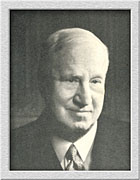
One of my heroes in the faith, T. T. Shields (1873-1955), preached a message at Jarvis Street Baptist Church (the church he pastored from 1910-1955) on January 22, 1928 which I think still has value for us today.
It is reproduced in The Gospel Witness and can be found here. I suggest we all read it and reflect on what makes a Baptist a Baptist.
3 Comments | Baptist Distinctives, T. T. Shields | Permalink
Posted by allenmickle

I came across the book almost purely by accident. Dr. Haykin and I had headed to the Anglican Book Centre in Toronto and I had found a couple of deals. On my way out, I saw this hiding on the new arrival section. I saw the name, Robert Clouse, who of course I was quite familiar as the editor of The Meaning of the Millennium and a contributor to Two Kingdoms: The Church and Culture Through the Ages. I picked it up and saw the recommendations by Edwin Yamauchi, Donald Campbell and Homer Kent. At this point I knew I had found something quite good. Dr. Haykin was right. It was serendipitous.
This book fills a huge gap in historical theological scholarship. The meaning of the millennium has of course been an incredible debate since the apostles themselves when they asked, “Lord, will you at this time restore the kingdom to Israel” (Acts 1:6)? It even goes back further as to when God would establish his eternal kingdom. What is the nature of the millennium (Rev 20)? Is it earthly? Is it spiritual? When will Christ comes back in relation to the millennium? Before? After? These questions have raged for millennia themselves.
What Clouse has done is sift through primary source material from the very early Church fathers to today and collate for us their writings on the millennium and the end times. Throughout he also offers annotated notes to the various writers and writings.
First, he deals with biblical foundations related to eschatology. He discusses issues of the rapture, the seventy weeks of Daniel, the tribulation, Armageddon, the millennium, and the final judgment. From there, he begins in the Church Fathers.
He includes material from Papias, Irenaeus, Justin Martyr, Tertullian, Hippolytus, Commodianus, Lactantius, and Origen. He then moves into an extensive section on Augustine. He then moves into the Medieval and Reformation period with the Anabaptists, John Calvin, Martin Luther, Guy de Bray, and the English Congregational Church. From there he moves to the 17th century revival of premillennialism in Johann Alsted, Joseph Mede, John Archer, John Rogers, and Anna Trapnel. Then he proceeds to 18th century postmillennialism with Daniel Whitby and Jonathan Edwards. He goes from there to 19th century dispensationalism with John N. Darby, William E. Blackstone, and Dwight L. Moody. Then he moves to 20th century developments with C. I. Scofield, William S. McBirnie, Christabel Pankhurst, and Leonard Sale-Harrison. Finally, in the 21st century he looks at Hal Lindsey and Tim LaHaye and Jerry Jenkins. He finally includes helpful reading to which students of eschatology can move on.
I have only briefed it but I find it overall very good. Clouse’s comments are excellent and judicious and do not try to bias the reader into one position over another. I have some small qualms, but they are quite small. This book is incredibly helpful. Even the introduction is worth the price of the book where Clouse simply gives us the flow of eschatological thought throughout Church History. Clouse is truly a historian who can and should be emulated.
If I were to teach a class on eschatology, this would be a required book. It is so important to have an understanding of the history of a doctrine in the life of the Church; especially on such a divisive doctrine as eschatology. This book cannot be recommended any higher! Go out and get yourself a copy today! You can find it here.
1 Comment | Eschatology | Permalink
Posted by allenmickle

It is true that many in Evangelicalism see C. H. Spurgeon as a hero of sorts. Yet, many, who do not embrace the theology that Spurgeon embraced, blindly believe him to be their hero, when probably they are not.
There is a fantastic article found here by Alan Maben that truly asks you the question as to whether you really like Spurgeon or not. After reading this you may find out you don’t!
Leave a Comment » | C. H. Spurgeon, Calvinism | Permalink
Posted by allenmickle

Gribben continues his critique of Left Behind and generally all rapture fiction by dealing now with issues of ecclesiology and the Christian life in general. Gribben at this point will begin to cause people to perk up their ears; especially dispensationalists. Many may not agree with Gribben’s critiques of dispensational theology, but overall, he is on track in noting the many problems within the Left Behind theology.
His first issue he finds in the Left Behind material as well as in most dispensational writing is the problem of not referring to those who are saved after the rapture as the Church. Gribben is right to note that the phrase “tribulation saints” does not occur anywhere in the Scriptures to refer to those saved after the rapture. But, what should we call those who are saved after the rapture? If the rapture removes the church from the physical sphere of the earth? Then who are these Christians? Dispensationalists would normally argue that these hearken back to Old Testament believers. For instance, dispensationalists argue that there is no need for the ordinances since the Church has been removed. There is no need to celebrate communion for the Lord has come (1 Cor 11:26).
The major problem though, is the Gribben does not offer a reasonable alternative. He is right to note that these ordinances are a “means of grace” in a sense (p. 86). He does not adequately deal with what dispensationalists argue regarding the ceasing of the ordinances following the removal of the church at the rapture. He also is not very convincing in his reasons for calling these individuals “the church.” Regardless, he is right in my opinion regarding the low view of the church in today’s theology. But, not calling these individuals the church, I am not convinced, creates a low view of the church. Of course, progressive dispensationalists do not necessarily argue that there are two peoples of God (I believe in one people of God) but that there are two distinctions between the two groups (Israel and the Church) (see p. 82).
Also, I would correct Gribben’s thinking about dispensationalism and the New Covenant (p. 85). Many modern dispensationalists argue that the church does indeed participate in the New Covenant today (see R. Bruce Compton’s, “Dispensationalism, the Church, and the New Covenant” in Detroit Baptist Seminary Journal).
Regarding worship and church life as depicted in the Left Behind series, I would whole-heartedly agree with Gribben in that the series seriously downplays the required corporate element of being part of the Church (whether we call it the church or not). Of course, this is quite typical of our salad bar type Christianity today where you take what you want and leave what you do not and never commit to anything. The local church is of such importance to us in this dispensation (to use a good dispensational term!) that our whole lives should be governed around it. The local church is of the highest priority in the life of the believer, despite what modern Evangelicalism believes. With Gribben I agree with this. The Left Behind series does a serious disservice to Christianity on this issue.
Also, Gribben is right to note the problems with the spirituality outlined in the Left Behind series. It does reflect a very mystical spirituality which is foreign to the Scriptures.
Gribben also has issues with how the Left Behind series portrays the relationship of the Christian to the Law (p. 91). Of course, Gribben is right to note the difference between what classical dispensationalism has taught on the issue compared to the idea of being under no law at all in the Left Behind series. Of course, dispensationalists are not antinomians. We are under the Law of Christ. But, we are not under the Law of Moses (although Gribben is incorrect regarding dispensationalists and the teaching of Christ. Only some believe the teachings of Christ [i.e the Sermon on the Mount for example] are not for today). You cannot divide the law up into various arbitrary divisions because you do not want to be under the civil or ceremonial law. The law is one whole. You are either under it, or you are not (see Alva McClain’s, Law and Grace).
Finally, Gribben’s covenant theology permeates a lot of thinking. He is very opposed to the idea of not calling those in the tribulation period the church, because of course he believes that all covenant believers, regardless of the dispensation, have been the church. This of course as a dispensationalist I cannot agree with for various reasons. I would of course direct readers to a number of publications that deal with this issue most specifically, Charles Ryrie’s, Dispensationalism and Renald Showers’, There Really is a Difference!
Apart from these caveats, I agree with Gribben’s premise. There is a low view of the church today and the Left Behind series are not helping. Do not turn to them for effective teaching in areas of ecclesiology. We, covenant theologians, new covenant theologians, and dispensationalists alike, should uphold a very high view of the church today.
4 Comments | Book Series, Eschatology, Rapture Fiction | Permalink
Posted by allenmickle
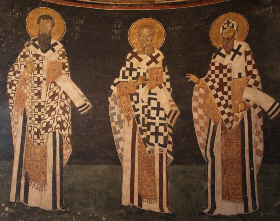
You all need to check out this brief article at Reformation21 written by Dr. Michael Haykin on the importance of studying the Early Church Fathers. This is something really that no Christian can do without reading!
Also, keep in the back of your minds that the next issue of Eusebeia: The Bulletin of the Andrew Fuller Centre for Reformed Evangelicalism will be dedicated to the Early Church Fathers. For information on that, please feel free to contact me.
1 Comment | Church History, Michael Haykin | Permalink
Posted by allenmickle
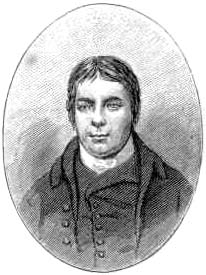
In a circular letter to the Northamptonshire Baptist Association in May 1785, Fuller offers some tremendous reasons for pursuing the study of Church History. Specifically he is writing about how to respond to the fact that the church is falling into sin and lethargy. This is his first way to begin to solve the problem.
This portion can be found in The Armies of the Lamb, pp. 105-106.”
First, let us recollect the best periods of the Christian church, and compare them with the present; and the best parts of our lown life, if we know when they were, and compare them with what we are now. A recollection of the disinterestedness, zeal and godly simplicity of the primitive Christians, and their successors in after-ages, millions of who, in Christ’s cause, loved not their lives unto death, would surely make us loathe ourselves for our detestable lukewarmness! As Protestants, let us think of the fervent zeal and holy piety of our Reformers–think what objects they grasped, what difficulties they encountered, and what ends they obtained! As Protestant Dissenters, let us reflect on the spirit and conduct of our Puritan and non-conforming ancestors. Think how they served God at the expense of all that was dear to them in this world, and laid the foundation of our churches in woods, and dens, and caves of the earth! Say, too, was their love to God more than need be? Is the importance of things abated since their death? Might not they have pleaded the anger and cruelty of the times in excuse for a non-appearance for God, with much more seeming plausibility than we can excuse our spirit of hateful indifference? O let us remember whence we are fallen, and repent!”
Leave a Comment » | Andrew Fuller, Church History | Permalink
Posted by allenmickle
 VS
VS 
I was reading a message preached by Dr. T. T. Shields (1873-1955) January 16, 1944 at Jarvis Street Baptist Church titled Does “Killed in Action” Mean “Gone to Heaven?” In it he deals with differring denominations and that in all of them there are those who are in need of being saved. He had a comment regarding Harry Emerson Fosdick (1878-1969) which made me chuckle.
“What about Baptists? Surely that are all right! They ought to be, but I have met hundreds of Baptists who were just as dry as my Presbyterian friend, though they had been immersed! Harry Emerson Fosdick is a Baptist of sorts.”
According to Shields, Fosdick was a Baptist in name only. He did not possess true saving faith necessary to make him a true Baptist.
1 Comment | Harry Emerson Fosdick, T. T. Shields | Permalink
Posted by allenmickle


 Working out Salvation with Fear and Trembling