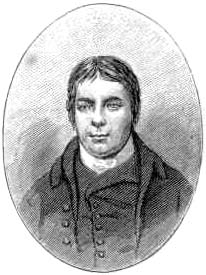
Andrew Fuller the Reader Conference Details

April 18, 2007

cao16f0x.jpg

For all of you have been waiting with baited breath for details about the up-coming Andrew Fuller the Reader Conference at The Southern Baptist Theological Seminary on August 27-28, 2007 here you go!

Please go here to download a copy of the brochure which now has all the up-to-date information regarding speakers, times, registration, and costs!

Here is the newly revised schedule:

Monday, August 27

7:30-9:15 am Breakfast & Registration

9:30 am Michael Haykin (Toronto Baptist Seminary)
Andrew Fuller the theological reader

11:00 am Jeff Jue (Westminster Theological Seminary)
Andrew Fuller: heir of the Reformation

12:30 pm Lunch

2:00 – 2:40pm Parallel sessions

a. Michael McMullen (Midwestern Baptist Theological Seminary)
Editing Andrew Fuller’s diary

b. Barry Howson (Heritage College, Cambridge, ON)
Andrew Fuller and his reading of John Gill

c. Allen Mickle (University of Wales, PhD student)
Andrew Fuller and the Johnsonians: early theological reading

2:50-3:30 pm – Parallel sessions

d. Paul Brewster (Southeastern Baptist Theological Seminary Ph.D. student)
Andrew Fuller as a pastor-theologian

e. Nigel Wheeler (Pretoria University Ph.D. student)
Andrew Fuller’s ordination sermons

f. Chris Chun (St.Andrews University Ph.D. student)
Andrew Fuller and the sense of the heart

6:00 pm Dinner

7:30 pm Russell Moore (Vice-President, The Southern Baptist Theological Seminary)
Banquet speaker
The contemporary significance of Andrew Fuller

Tuesday, August 28

7:30-8:30 am Breakfast

9:00 am Carl Trueman (Westminster Theological Seminary)
John Owen’s influence on Andrew Fuller

10:30 am Tom Nettles (The Southern Baptist Theological Seminary)
Jonathan Edwards — theological mentor to Andrew Fuller

12:00pm A closing word


Forthcoming Publication

April 18, 2007

I wanted to let you all know about an interesting new resource coming out from Blackwell Publishers called The Encyclopedia of Christian Civilization. It is to be published in 3 volumes and is due out in 2008. Here is some information about it.

“The Encyclopedia of Christian Civilization is a study of the cultural complex and civilization created during the past 2000 years by the Christian Church. Even as modern secular civilization has become the dominant cultural force in the world, Christianity remains a civilization in its own right with its own norms, values, institutions, forms of expression, terminology, and modes of communication. Further, there are elements of modern secular civilization that are of distinctly Christian origin, the calendar being the most obvious example. Even today, the pervasive influence of Christian ideas and legacies is evident in sectors of life that are far removed from the mainstream of Christian history. The Encyclopedia of Christian Civilization will examine the sources of Christian culture and civilization, the depth of its historic influence on human culture and the reasons for its enduring strength.

I have the privilege of contributing two brief biographical entries in this encyclopedia. John Gill, the great Baptist Theologian, and Bob Jones, Sr., the 20th century evangelist and founder of Bob Jones University.

Keep a look out for this helpful up-coming encyclopedia.


Want to do a Post-Graduate Th.M. Degree but don’t want to move? Look no further!

April 18, 2007

tbs.gif

Have you completed an M.Div. or an M.A. degree and are looking for a post-graduate research degree perhaps as a stepping stone to doctoral work? Do you not want to move from where you are at? Then look no further than Toronto Baptist Seminary and Bible College. TBS offers the one year Master of Theology degree (Th.M.) off-site.

The following material is taken right from the TBS website and from the TBS Prospectus. Consider it! In a world with increased creative doctrinal teachings and such, it is important for those in the ministry to consider further academic studies.


Master of Theology

This research degree is ideal for those who have taken a Master of Theological Studies or a Master of Divinity (without a thesis) and thus this degree can serve as a stepping-stone to a doctoral degree or be a terminal research degree. Entrance into the degree is dependent on an overall B+ average or higher in the preceding degree.

Currently offered in New Testament Studies, Christian Thought, and Baptist Studies.

Co-Requisite:

Depending on the area of study, demonstrated reading ability in a modern language (Theological German, Theological French, or Theological Dutch) and an ancient language (Greek, Hebrew, or Latin).

Credits Required for Graduation

30 Semester Hour Academic Credit

Subject

Th.M.

Fall

Winter

Summer

Graduate Research & Writing

3

Reading Course in area of specialization (New Testament, Christian Thought, or Baptist Studies)

3

3

Reading Course in area of thesis

3

3

Thesis

6

9

Total Semester Hours

9

12

9

Thesis

The thesis is to be around 45,000 words. A prospectus of the thesis must be approved by the end of the fall of the first year. An oral defence involving three readers (two internal and one external), chaired by the thesis supervisor, will take place upon completion of the thesis at the end of the summer prior to the Fall Convocation.


“Listening to the Past – Lessons from Andrew Fuller” 14

April 10, 2007

fuller.jpg

I apologize for not posting this past weekend on either my review of Rapture Fiction (sorry again Crawford!) or my weekly quote from Fuller. Being home visiting the family and celebrating the death and resurrection of our Lord and Saviour Jesus Christ can be quite a busy feat! This coming weekend is even busier so I doubt I will be able to post anymore this week, let alone again for my Rapture Fiction review or my Fuller quotes. My sister is getting married on Saturday to a godly young man and I am performing the ceremony. Then I am preaching at a local church here in Toronto on Sunday evening so I will be quite busy.  Therefore, I wanted to leave you with a quote for the week by our good friend Andrew Fuller. This time, because of the spirit of marriage, I draw this from his commentary on Genesis especially 2:18-25 and the creation of woman.

This selection can be found in Fuller, Works, III:9-10.

“The subject closes with a more particular account of the creation of woman. We had a general one before (chap. i.27); but now we are led to see the reasons of it. Observe, 1. It was not only for the propagation of the human race, but a more distinguished provision for human happiness. The woman was made for the man; not merely for the gratification of his appetites, but of his rational and social nature.  It was not good that man should be alone; and therefore a helper that should be meet, or suitable, was given him. The place assigned to the woman in the heathen and Mahomedan countries has been highly degrading; and the place assigned her by modern infidels is not much better. Christianity is the only religion that conforms to the original design, that confines a man to one wife, and that teaches him to treat her with propriety. Go among the enemies of the gospel, and you shall see the woman either reduced to abject slavery, or basely flattered for the vilest of purposes; but in Christian families you may see her treated with honour and respect; treated as a friend, as naturally an equal, a soother of man’s cares, a softener of his griefs, and a partner of his joys. 2. She was made after the other creatures were named; and, consequently, after Adam, having seen and observed all the animals, had found none of them a fit companion for himself, and thus felt the want of one. The blessings both of nature and of grace are greatly endeared to us by our being suffered to feel the want of them before we have them. 3. She was made out of man, which should lead men to consider their wives as a part of themselves, and to love them as their own flesh. The woman was not taken, it is true, from the head, neither was she taken from the feet; but from some where near the heart! 4. That which was now done would be a standing law of nature. Man would ‘leave father and mother, and cleave to his wife, and they twain should be one flesh.’ There was no guilt, and therefore no shame: shame is one of the fruits of sin.”


Andrew Fuller – The Reader

April 10, 2007

I just wanted to let everyone know of the incredible opportunity I have been given this August. Amongst other eminent historical scholars, I have been allowed to present a paper at the up-coming Andrew Fuller – The Reader conference being held at The Southern Baptist Theological Seminary on August 27-28.I will be speaking on “Andrew Fuller and the Johnsonians: Early Theological Study.” Johnson was a writer that held some unorthodox positions on Christology that we know Fuller read and with which he had a difficult time. While Fuller was influenced by Johnson he never wrote anything specifically against him. My task will be to study Fuller thoroughly and see how Johnson’s false views on the person of Christ influenced Fuller. This is a perfect topic because it fits right in with my Ph.D. studies on the apologetic Christology of Fuller.

I will be presenting this paper on August 27 during the first parallel session (2:00 PM – 2:40 PM). Looking forward to you all being there for this excellent conference!


Andrew Fuller the Preacher

April 9, 2007

fuller.jpg

While Fuller was a very popular preacher, it is well-known that he was perhaps not the best preacher. In doing some reading and thought into Andrew Fuller the Preacher, I came across some interesting quotes in which everyone may be interested.

“His own sermons were weighty, logical, and grave; he had not the finish of Foster not the splendor of Hall, but his simple and vigorous style expressed simple and vigorous thought; that he was an effective preacher may be inferred from the fact that when Thomas Chalmers listened to him he resolved to so far make Fuller model that he would never again read a sermon, but henceforth trust to extemporaneous delivery” (T. Harwood Pattison, The History of Christian Preaching [Philadelphia, PA: American Baptist Publication Society, 1903), p. 287.

“There is little warmth–no heat; imagination is scarcely in evidence at all; and ‘flights of eloquence’ nowhere appear. The sermons on themes are orderly, discriminating, logical; the expositions… are careful and plain, in homily form; the style is clear and even, but lacks grace, fervor, and movement. Excellent good sense and timeliness for their day characterize the writings of Fuller, and they did good and enduring service; but they have not enough literary quality to make them standards, and their adaptation to contemporary though has, or course, passed away with their own times” (Edwin Charles Dargan, A History of Preaching [New York: George H. Doran, 1912], II:333).

“As a preacher he soon became popular, without any of the ordinary means of popularity. He had none of that easy elocution, none of that graceful fluency, which melts upon the ear, and captivates the attention of an auditor. His enunciation was laborious and slow; his voice strong and heavy; occasionally plaintive, and capable of an agreeable modulation. He had none of that eloquence which consists in a felicitous selection of terms, or in the harmonious construction of periods; he had a boldness in his manner, a masculine delivery, and great force of expression. His style was often deformed by colloquialisms, and coarse provincials; but in the roughest of his deliveries, ‘the bones of a giant might be seen.’… In entering the pulpit, he studied very little decorum, and often hastened out of it with an appearance of precipitation… Not aware of its awkwardness, in the course of his delivery, he would insensibly place one hand upon his heart, or behind him, and gradually twist off a button from his coat, which some of his domestics had frequent occasion to replace…. He was not the exact model of an orator” (J. W. Morris, Memoirs of the Life and Writings of the Rev. Andrew Fuller, late Pastor of the Baptist Church in Kettering, and Secretary to the Baptist Missionary Society (n.o. High Wycomebe, 1816), pp. 81-82).

These are just a few looks at Fuller’s pulpit ability. Yet, for Fuller it was passion in the pulpit over rhetorical and oratorical skill that he rightly stressed was important for the preacher.


Art and Soul: Spirituality and the Aesthetic – The Andrew Fuller Centre for Reformed Evangelicalism Lectures

April 9, 2007

coppengermark.jpgcao16f0x.jpg

The Andrew Fuller Centre for Reformed Evangelicalism would like to present its annual lecture series. This year, Dr. Mark Coppenger will be lecturing on Art and Soul: Spirituality and the Aesthetic. It will be held June 2, 2007 at Grace Bible Church, Cambridge, ON.

Dr. Coppenger is pastor of Evanston (IL) Baptist Church and Distinguished Professor of Christian Apologetics at The Southern Baptist Theological Seminary. He has been a Wheaton College philosophy professor, executive-director of the State Convention of Baptists in Indiana (SBC), founding editor of SBC LIFE, and president of Midwestern Baptist Theological Seminary. He has a Ph.D. from Vanderbilt and an M.Div. from Southwestern Baptist Theological Seminary.

The cost of the lectures is $30. The breakdown of the lectures is as following:

9:30 AM – 10:30 AM – “The Soul of Art”
10:30 AM – 11:00 AM – Break
11:00 AM – 12:00 PM – “The Soul of the Artist”
12:00 PM – 1:30 PM – Lunch Break
1:30 PM – 2:30 PM – “The Soul of the Viewer”

If you would like to attend please send your name, address, telephone number, e-mail and a cheque or money order for $30 (Canadian funds, made out to Toronto Baptist Seminary with “Fuller Lectures” in memo line) or VISA/Mastercard information to:

Andrew Fuller Centre for Reformed Evangelicalism
c/o Toronto Baptist Seminary and Bible College
130 Gerrard Street East
Toronto, ON M5A 3T4
416-925-3263 (phone)
416-925-8303 (fax)
allen.mickle@tbs.edu


“Listening to the Past – Lessons from Andrew Fuller” 13

April 1, 2007

fuller.jpg

This past week in chapel, Pastor Carl Muller of Trinity Baptist Church, Burlington, ON, brought us the Word of God with a focus on the Christian and joy. It was a good reminder of what the inward and outward disposition of the Christian is to be! Andrew Fuller also wrote on the issue of the Christian and joy. In a circular letter of 1795 (titled, “Why Christians in the Present Day Possess Less Joy than the Primitive Disciples”) Fuller discusses the reasons why Christians do not experience joy and some solutions for the problem.

The quote from this letter can be found in the Works, III:330.

“The primitive Christians were in the habit of considering all things as working together for good, and so of deriving joy from every occurrence. If the world smiled upon them, they rejoiced, and availed themselves of the opportunity for spreading the gospel; of if it frowned on them for their attachment to Christ, they rejoiced that they were counted worthy to suffer shame for his name’s sake. By thus converting every thing into food for joy, they answered to the exhortations of the apostles, ‘Let the brother of low degree rejoice that he is exalted; but the rich in that he is made low.’–‘Beloved, count it all joy when ye fall into divers temptations.’–‘Rejoice evermore.’–In everything give thanks.’ If we would feel like them, we must enter into their views; we must have less of the complaining patriarch, as well as the whining merchants; and more of that temper which prompted the holy inhabitants of heaven, on every new dispensation of providence, to cry, ‘Amen Hallelujah!'”


A Question in Baptist Historiography

April 1, 2007

This has come up on another blog so I figured I would address the issue here. A question of historiography arises in Baptist History particularly in the life of William Carey. Many take it to be a cut and dry issue but it is hardly. Let’s start with some context around the question.

William Carey (1761-1834), affectionately known as the “Father of Modern Missions,” in 1785 met with other men from churches in what was called the Northamptonshire Association. These regular meetings were a time for exchanging of ideas, fellowship, and spiritual encouragement. At this meeting it was asked for someone to propose a topic for discussion. Carey proposed a theme on which he had given much thought.

“Whether the command given to the apostles to teach all nations was not binding on all succeeding ministers, to the end of the world, seeing that the accompanying promise was of equal extent.”

This is where the question arises. The issue is not with Carey’s question but with the answer that was given to the question. There are a number of options.

John Webster Morris, who was pastor of Clipston Baptist Church in Northamptonshire, who was present at the meeting wrote that John Ryland, Sr.  responded with,

“You are a miserable enthusiast for asking such a question. Certainly nothing can be done before another Pentecost, when an effusion of miraculous gifts, including the gift of tongues, will give effect to the commission  of Christ as at first. What, Sir! Can you preach in Arabic, in Persic, in Hindustani, in Bengali, that you think it your duty to send the gospel to the heathens?”

John C. Marshman, the son of Carey’s co-worker in India, Joshua Marshman, reported that Ryland, Sr. said,

“Young man, sit down. When God pleases to convert the heathen, he will do it without your aid or mine!”

In contrast to these two versions is the response of John Ryland, Jr. about the situation. He denies it even happened.

“I well remember the discussion of this question, which fully occupied the evening. Another had been discussed, after dinner, respecting village-preaching–What was a sufficient call, to attempt introducing it into places where it had not been usual before?–which, therefore, seems to leave no room for that ill-natured anecdote, respecting my father and young Carey, to have taken place this year, which is said to have been before the end of 1786; whereas my father had left Northampton before the Minister’ Meeting in 1786. And I must consider it as very unlikely to have occurred in 1785, for several strong reasons. I never hard of it, till I saw it in print, and cannot credit it. No man prayed and preached about the latter-day glory, morethan my father; nor did I ever hear such sentiments proceed from his lips, as tre there ascribed to him.”

Whatever the facts, it is true that among many Calvinistic Baptists in this period there would have been some who would have uttered these sentiments. The question though is did John Ryland, Sr. utter these kind of sentiments? Ryland was hardly a hyper-Calvinist but it would not have been unusual for even evangelical Calvinists to say similar things. Even Fuller was a little taken aback by Carey’s  proposal. He had himself said, “If the Lord should make windows in heaven, might such a thing be!”

What is the true scenario that happened? Who is to know for sure. But it is one of those interesting questions in Baptist History. Let us not just quote John Marshman’s statement about what happened without stating that there is a debate about this event in the life of William Carey.


My Favourite Baptist History Blogs

April 1, 2007

The benefit of a blog is to be able to share your thoughts with people who do not always get to see you in person. In turn, you get the opportunity to learn from others. Since one of the main focuses of my blog is on Baptist history I wanted to share with you some of my favourite Baptist history blogs. I rank them in no particular order.

Historia Ecclesiastica

Dr. Michael A. G. Haykin, Principal and Professor of Church History and Reformed Spirituality at Toronto Baptist Seminary and Bible College has in my opinion one of the best Church History blogs around. In fact I think he is one of the best Church Historians in the world (and that’s not just because he’s my boss!). His particular areas of expertise are in the Ancient Church, Baptist History, and Spirituality. His blog is carefully thought out, and tremendously applicational!

Nathan A. Finn

Nathan Finn, Ph.D. student in Church History at Southeastern Baptist Theological Seminary is one of the bright up-and-comers in Church History. His insight in particular into the Southern Baptist Convention. He also has a keen interest in 18th century British Baptists which in my opinion is one of the most fascinating areas of Baptist History (and that’s not just because I’m doing my dissertation in that area!). Keep your eye on this blog.

Pastor Steve Weaver’s Blog

Steve Weaver, a Th.M. student at Toronto Baptist Seminary and Bible College and Pastor of West Broadway Baptist Church in Lenoir City, Tennessee. His love for Baptist History is evident in his blog postings especially on Hercules Collins. His being a pastor is also most helpful as he seeks to show how studying Baptist History can actually be life changing!

Praisegod Barebones

Bart Barber’s blog is extremely helpful in understanding Southern Baptist History. He also has a keen interest in areas of British Particular Baptist life which is always great. Plus, I agree with Nathan that he has the best Baptist blog name anywhere! He is gracious and helpful in clarifying complex issues in Baptist History.

Check out all of these blogs. They will help you in your understanding of Baptist History immensely!